A cruise vessel built for 80,000 people sounds more like science fiction than a real proposal.
Yet Freedom Ship is back in the spotlight, and the pitch is as bold as ever. If it ever leaves the drawing board, it wouldn’t just be another mega-ship. It would be a floating city built for long-term living, with homes, schools, medical care, parks, shops, and room for tens of thousands of people.
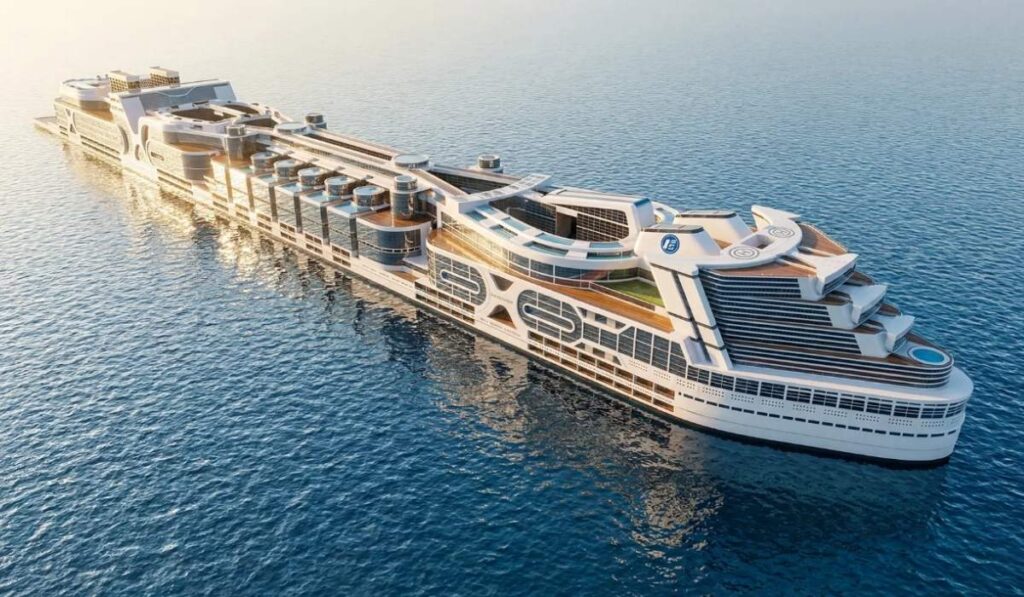
That’s what makes the idea hard to ignore. The scale also raises big questions about funding, rules, engineering, safety, and whether a project this huge can ever be built.
What Freedom Ship Says It Would be
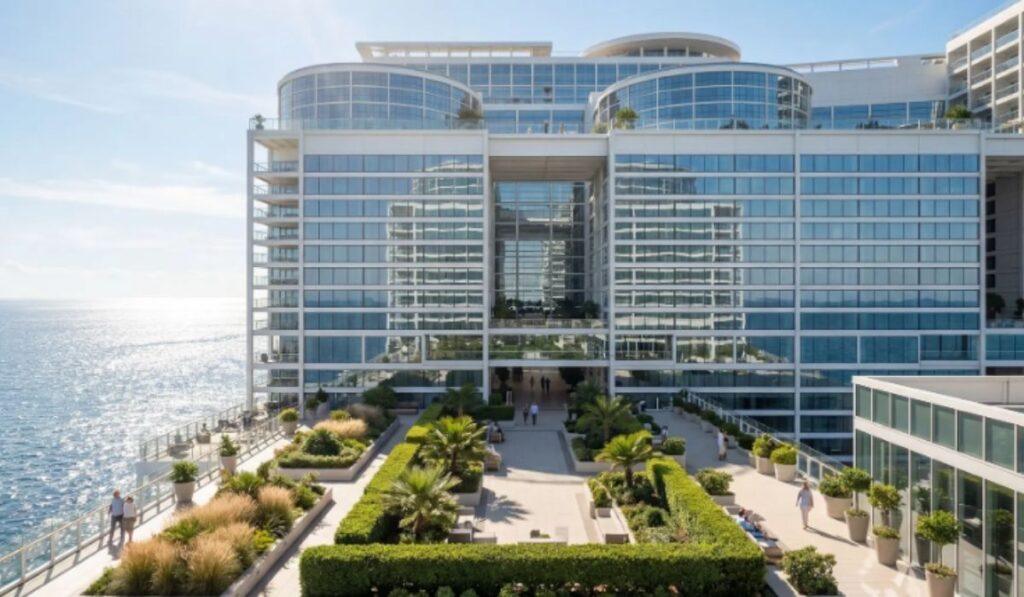
The company behind it, Freedom Cruise Line International, presents it as a permanently mobile city at sea. In its March 2026 announcement, the company said the vessel would measure more than 2 million gross tons, stretch roughly a mile in length, reach about 800 feet in width, and rise 30 stories above the waterline.

It also said the ship could hold more than 80,000 full-time and part-time occupants with a combination of 50,000 permanent residents, 10,000 visitors, and 20,000 crew.
For scale, even the biggest cruise ships sailing now are nowhere near that size. Royal Caribbean’s Icon-class ships carry about 5,600 guests at double occupancy, up to around 7,600 at full capacity, plus roughly 2,350 crew. Freedom Ship is being pitched as something much closer to a floating district than a conventional mega-ship.
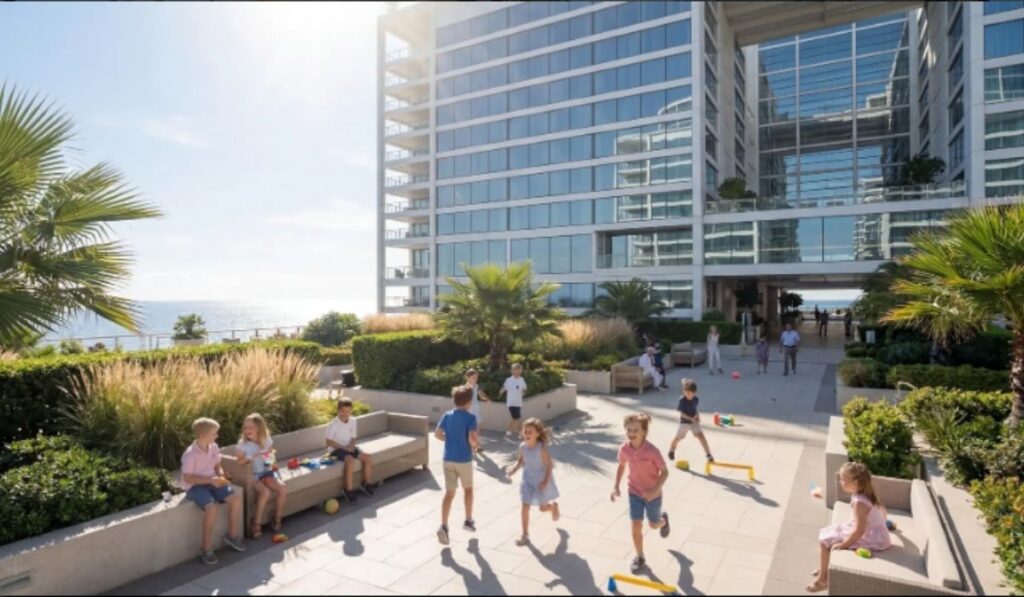
Life on Board Would Look More Like a City
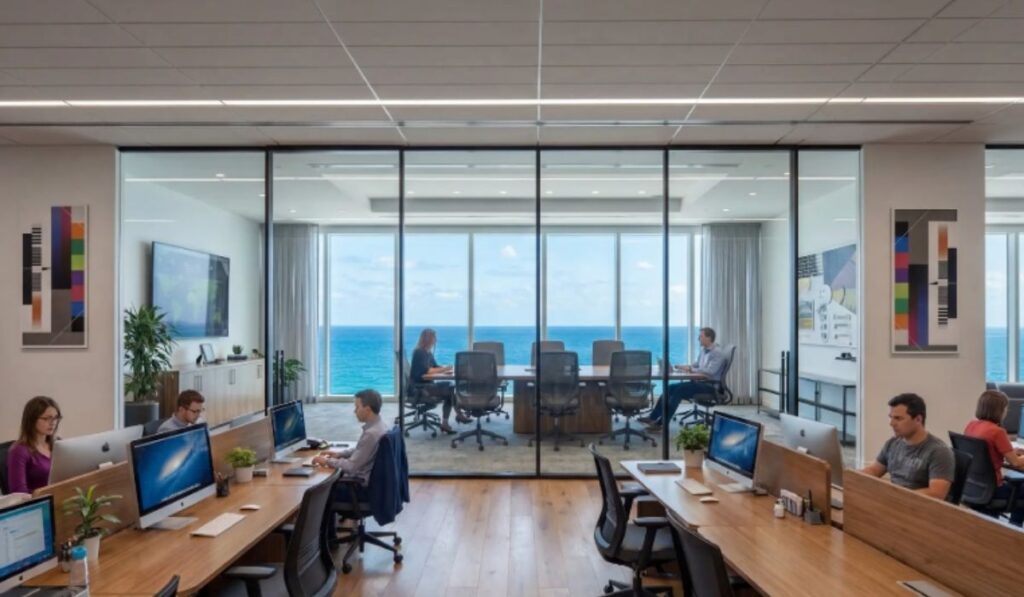
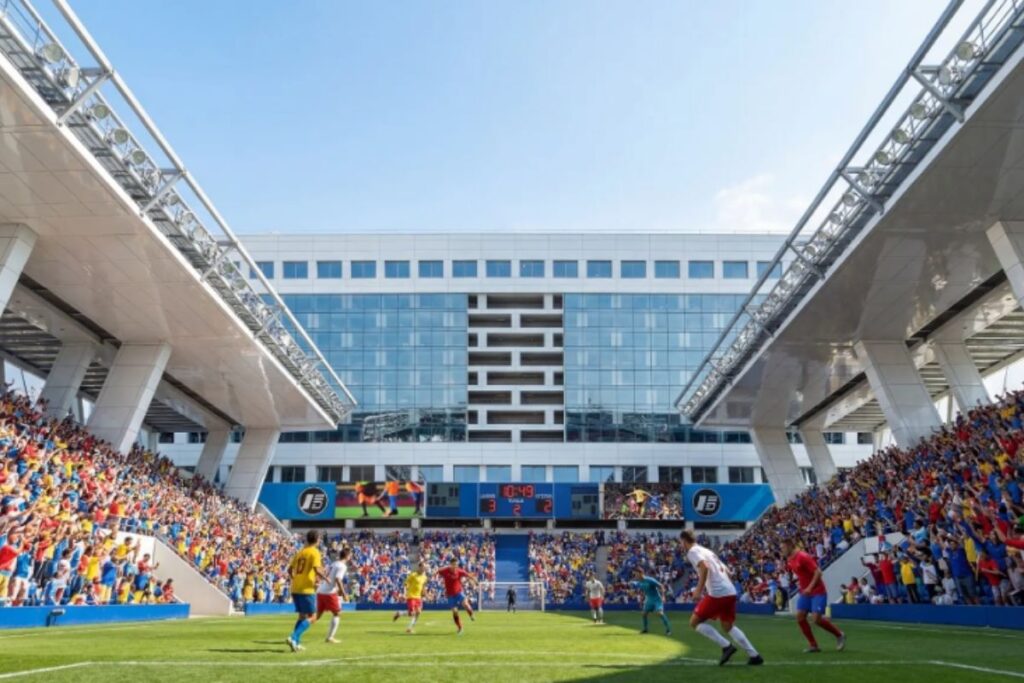
Freedom Ship’s March release says the project would include a hospital with medical research facilities, a K-12 school system, duty-free shopping, banks, spas, casinos, restaurants, offices, and park space. Other recent reports say the revived concept also includes hotels, museums, a water park, internal transit, and a 15,000-seat stadium.
That city-style thinking also shows up in how the backers describe the design. Roger Gooch, CEO of Freedom Cruise Line International, said, “We started with the view that the ship should not be a monolithic piece but visually comfortable, so we softened all the edges.”
He added, “We also want it to breathe, so we’ve gone to great lengths to allow walkways and green spaces.”
How the Project Would Operate
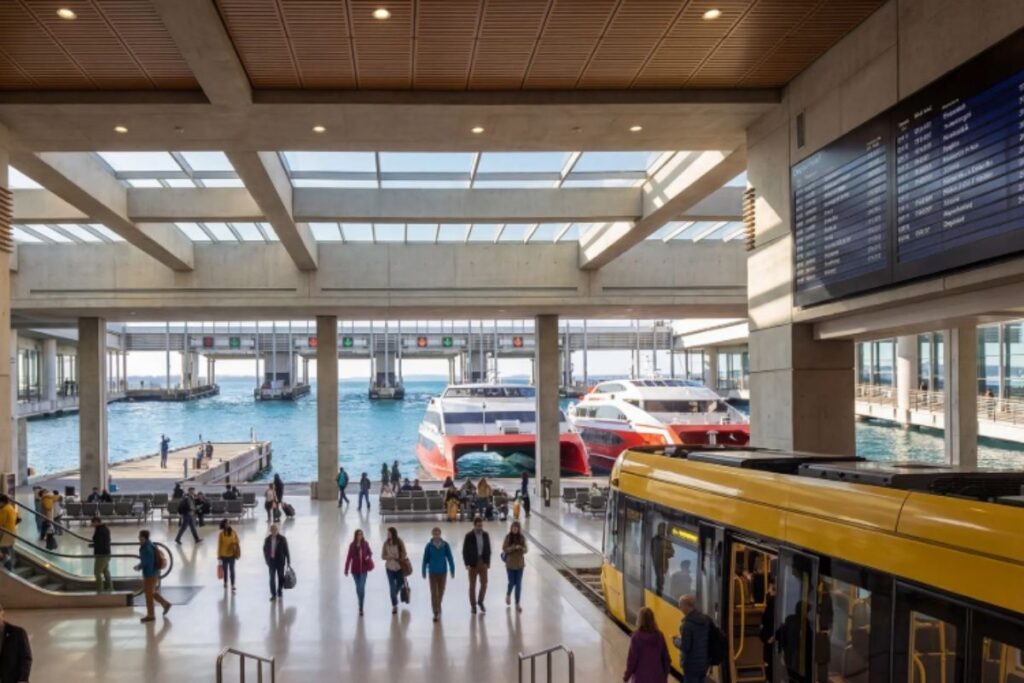
Freedom Ship is meant to circle the globe continuously, with official material saying it would stop near major ports for a week or more at a time. Since a vessel this size would be far too large for normal cruise terminals, passengers, residents, and visitors would likely head ashore by ferry or aircraft.
The ship would travel at around seven knots and complete one full loop of the globe every two to three years.
The cost is just as huge as the design. The project is estimated to cost about $16 billion.
That money is still the main hurdle. “We are firmly convinced that we can achieve this, but the crucial factor remains funding,” Gooch said.
The company is planning to build the ship in Indonesia if the money comes together, with construction taking about three to four years.

Why Nuclear Power Has Become Part of the Conversation
One reason the project is back in headlines is its nuclear-powered pitch. Supporters argue that a ship built to serve tens of thousands of people would need a vast and steady source of energy. Supporters say that could cut emissions compared with regular marine fuel while also keeping a city-sized operation running.
The company’s own March 2026 release is more cautious. It mentions advanced hybrid propulsion and other onboard systems, but it does not clearly spell out a full reactor plan.
Civil nuclear propulsion already exists in naval vessels and icebreakers. A giant civilian ship packed with residents, visitors, crew, schools, shops, and medical facilities is a very different case. That would raise questions not just about engineering, but also about approvals, inspections, emergency response, port access, and public acceptance.

The Biggest Problems Have Not Gone Away
Building the largest vessel ever proposed would be a major engineering test on its own. Add in long-term housing, constant utility demand, supply deliveries, offshore transfers, and the chance of nuclear propulsion, and the list of obstacles grows fast.
There is also the legal side. Rules for civilian nuclear-powered ships are still being worked through and updated in many parts of the industry. A project like Freedom Ship would need safety approval, operating rules, and cooperation from regulators long before anyone could think about welcoming 80,000 people aboard.
Then there’s the history. Freedom Ship has been talked about for years. The concept dates back to the 1990s, yet it still has not entered construction.
Project director Sridev Mookerjea is still upbeat. “It’s an extraordinary concept,” he said. “With a good dose of perseverance, we can turn this dream into reality.”

That optimism is easy to understand. So is the skepticism.
People Online Are Split
Public reaction has been mixed.
Some people love the ambition of it, even if they aren’t sure it will ever happen. One Reddit commenter wrote, “It feels nostalgic to see it get another run. The fantasy images are nicer this time.” Another said, “Not realistic, but tons of fun to think of.”

Others are far less convinced. One commenter put it bluntly: “I think its more likely BS.” Another focused on the logistics, writing, “I can’t imagine how complicated it would be to keep a ship like this stocked…”
That split reaction sums up the mood around the project. Some people see it as bold and fascinating. Others see it as little more than concept art.
For Now, It’s Still a Vision
Freedom Ship remains one of the most ambitious ideas ever proposed for life at sea. Its backers have revived the concept and put it back into cruise headlines, but the gap between concept art and construction is still enormous.
Until financing is secured and the major questions around engineering, regulation, and long-term operations are answered, Freedom Ship still exists more as an idea than a firm plan.
Would you ever live on a ship like this, or does the whole idea sound too unrealistic?
Today’s Top Cruise Deals
See today’s best deals from ALL travel agents