If you cruise out of Florida, you’ve got options… until you start filtering by one thing: the ship.
Want the newest mega ship with all the big-ticket features? You usually end up looking at the same handful of homeports over and over. Meanwhile, Florida’s Gulf Coast has often felt like the “easy-drive” option — great for convenience, but not always where the biggest ships show up.
That’s why the proposed new cruise terminal near Tampa Bay got so much attention when it first surfaced. The idea was simple: put a terminal on the Gulf side of the Sunshine Skyway Bridge, and suddenly the region would no longer be boxed in by the height limits that keep many newer ships from sailing into Port Tampa Bay.
But the story has changed in a big way since January 2026.
What started as a “watch this space” proposal has now become something much more definitive. In March, Governor Ron DeSantis signed SB 302, a law that strengthens protections around the Terra Ceia Aquatic Preserve and restricts the dredging and filling that would have been needed to make the project work. In practical terms, that has sunk the proposal.
At the same time, cruise growth in the Tampa area has not slowed down. Port Tampa Bay says demand continues to rise, its current terminals are operating near capacity, and it is planning future expansion to handle that growth. So while the “outside the bridge” mega-port idea has been blocked, Tampa’s cruise future is still expanding — just in a very different way.
Quick link: New Cruise Ships Launching in 2026 – Full List & What to Expect
1) What Was Being Proposed — And Why It Got So Much Attention
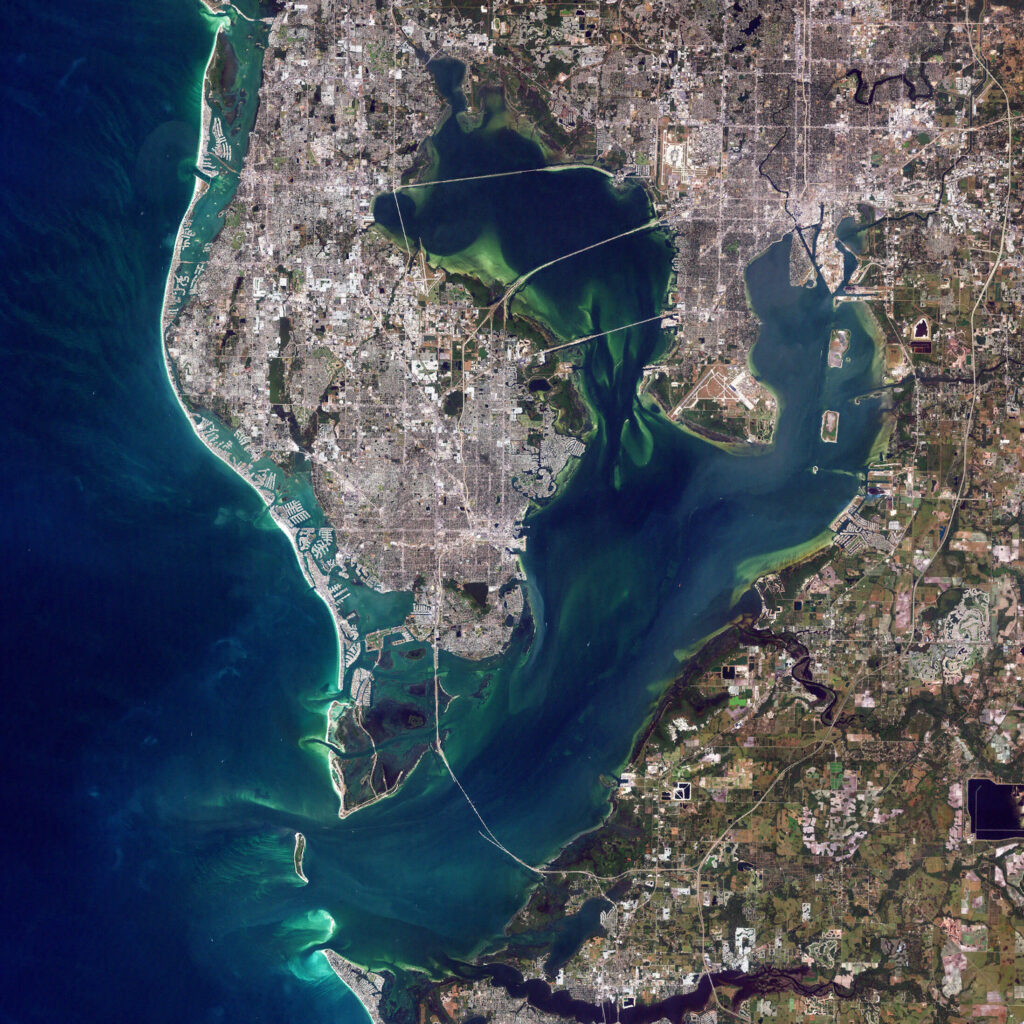
The proposal came from SSA Marine in partnership with Tampa-based Slip Knott LLC. The plan centered on the Knott-Cowen tract in Manatee County, just south of the Sunshine Skyway Bridge on the Gulf side, with public reporting describing the site at roughly 328 to 330 acres. Supporters pitched it as a privately financed multi-berth cruise terminal designed to accommodate newer, larger vessels that cannot reach Port Tampa Bay because of the bridge.
That location was the whole point.
Instead of ships needing to sail under the Sunshine Skyway to reach Tampa’s existing terminals, this site would have sat outside that bottleneck. In theory, that would have opened the door for much larger ships to sail from the Tampa Bay region without the bridge being the deciding factor.
That was what made the proposal feel like such a big deal for Gulf Coast cruisers. It wasn’t just about adding another cruise terminal. It was about changing the ship-size conversation for this side of the state.
2) The Skyway Problem Was Always The Whole Point
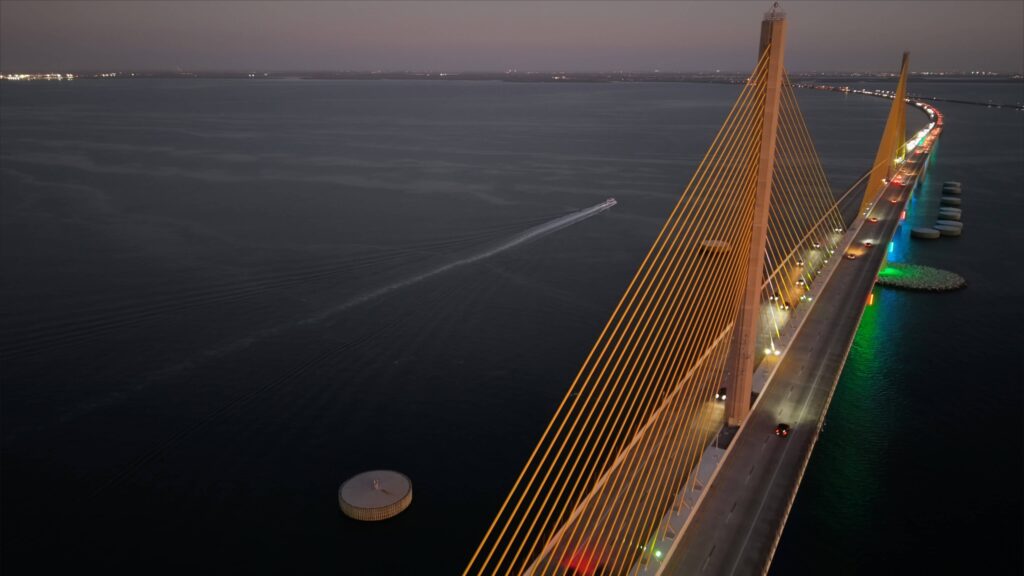
If you’ve cruised out of Tampa, you already know the Sunshine Skyway Bridge is part of the experience. It’s beautiful, it makes for a memorable sailaway, and it also creates Tampa’s biggest cruising limitation.
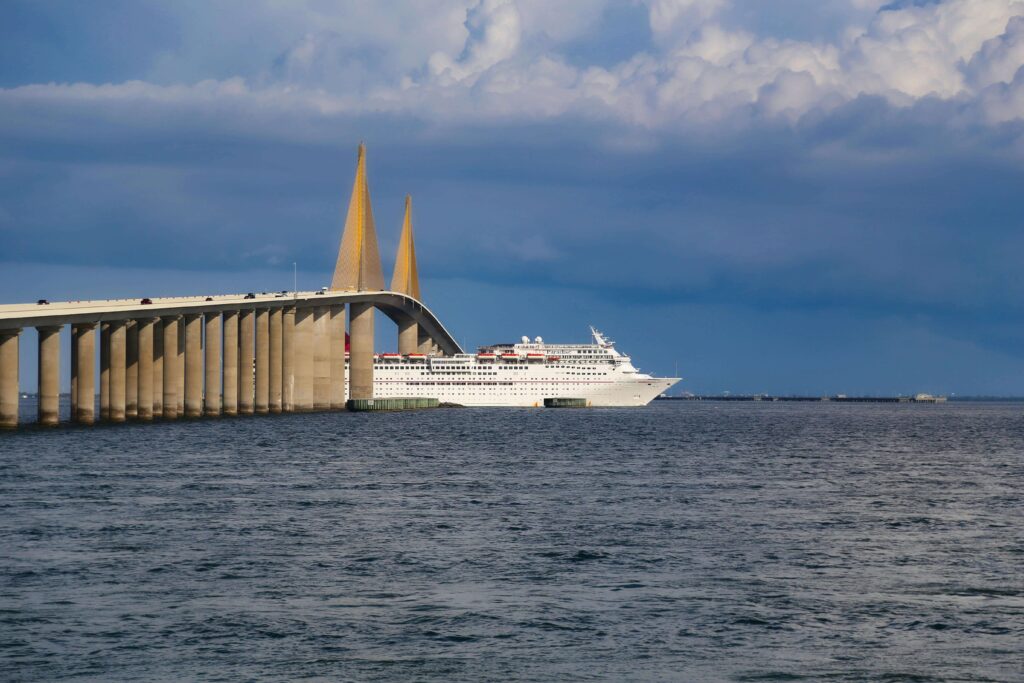
The issue isn’t demand. Florida has plenty of that. The issue is basic physics. Many of today’s newest and largest ships are simply too tall to comfortably make it under the bridge and reach Port Tampa Bay, which is why Tampa tends to get smaller ships rather than the newest mega-ship classes that dominate Florida’s Atlantic-side ports.
That’s why this proposal got so much buzz so quickly. It was being sold as a workaround to the single biggest factor limiting ship size in the Tampa area. Take the terminal outside the bridge, and the whole conversation changes. Or at least, that was the vision before environmental and political opposition caught up with it.
Suggested reading: Bigger Isn’t Always Better? How Carnival Cruise Ships Stack Up in Size
3) Why The Proposal Drew Immediate Pushback
From the beginning, the location was always going to be the hard part.
This wasn’t some empty, low-drama stretch of waterfront. The proposed site sat near the Terra Ceia Aquatic Preserve and close to Rattlesnake Key, in an area environmental groups and residents said was too sensitive for a project of this scale. Concerns quickly focused on dredging, habitat damage, vessel traffic, water quality, and the broader health of the surrounding ecosystem.
Opposition built fast. Environmental groups spoke out almost immediately, residents organized protests, and petitions gathered thousands of signatures. Even before Tallahassee stepped in, this had already turned into one of those proposals where the local resistance was impossible to ignore.
There were also signs early on that this was nowhere close to becoming a real port. The project was still at the concept stage, and the biggest questions weren’t about which cruise line might show up first. They were about whether the project could survive the public, environmental, and political process at all.
Recommended reading: A 6000-Passenger Mega Cruise Ship Has Arrived in Port Canaveral
4) The Real Turning Point Happened In Tallahassee
The biggest shift in this story didn’t come from a cruise line announcement or a local approval meeting. It came from the Florida Legislature.
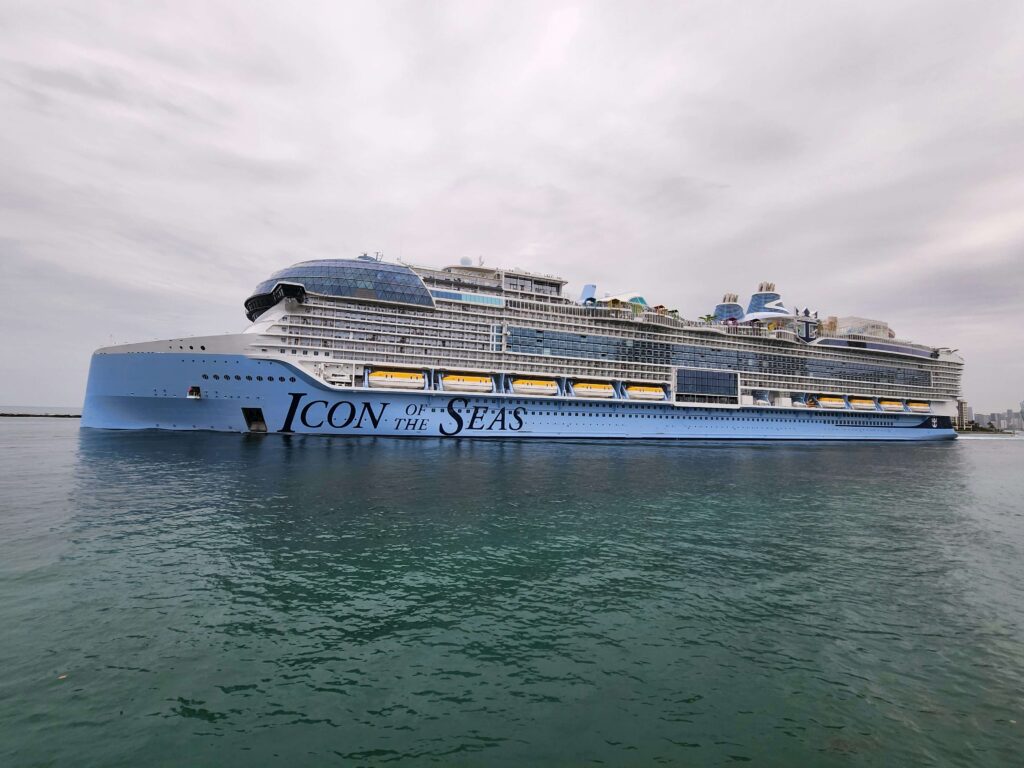
In February, lawmakers advanced SB 302, a broader coastal resiliency bill that included language affecting the Terra Ceia Aquatic Preserve. The Florida Senate says the bill prohibits approval of dredging or filling of submerged lands in the preserve except for limited reasons, and that immediately put the proposed cruise terminal in serious trouble because dredging would have been essential for larger cruise ships to access the site.
That was the moment this story stopped being about a controversial proposal and started becoming a proposal that might not survive at all. Once the legislation moved forward, the focus shifted away from cruise line interest and toward whether the project could even remain viable on paper.
Then on March 19, 2026, Governor Ron DeSantis signed the bill into law. In announcing it, the governor said there was no real need for another port in the middle of a conserved area and aquatic preserve, especially with Tampa Bay already served by three deep-water ports. That signing was the clearest signal yet that the proposal was effectively finished.
5) What SB 302 Actually Changed
The key issue was dredging.
According to the Florida Senate’s bill summary, SB 302 prohibits dredging or filling within the Terra Ceia Aquatic Preserve except in limited cases such as certain public navigation projects, preserve-enhancing work, public health needs, or certain marina and dock-related construction. That matters because the proposed cruise terminal depended on access work through exactly the waters now covered by those stronger restrictions.
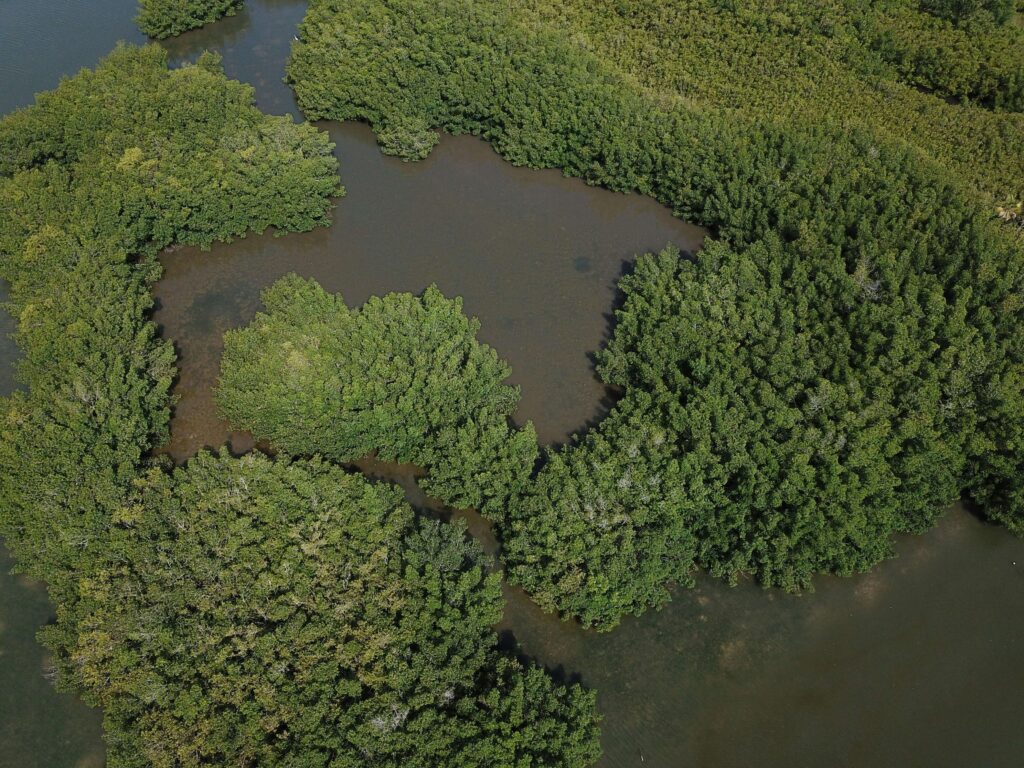
The bill’s effective date is July 1, 2026, but the practical reality changed the moment it was signed in March. By then, public reporting was already treating the project as blocked, and supporters of the preserve were calling it a major win.
So while the project’s backers originally framed it as a privately funded economic opportunity that could bring larger ships to the region, the biggest barrier is no longer just public pushback. It is now a legal and regulatory one too.
6) What This Means For Tampa-Area Cruisers
For cruisers, the practical takeaway is pretty simple: this proposal is no longer something to watch as a likely future mega-ship homeport.
The Manatee County site that was pitched as a way around the Sunshine Skyway Bridge has effectively been blocked, so the big “new Gulf-side terminal” vision is no longer the path forward. That means Tampa-area cruisers should not expect this proposal to suddenly bring in a wave of giant new ships that the current port setup cannot handle.
At the same time, that doesn’t mean cruise growth around Tampa has stalled. Port Tampa Bay says it welcomed a record 1.66 million cruise passengers in 2025, is tracking toward 1.8 million in 2026, and expects 394 cruise ship calls this year. The port also says its cruise terminals are operating near capacity as cruise lines continue exploring additional itineraries and expanded homeport opportunities in Tampa.
Related reading: Petition Against Royal Caribbean’s Perfect Day Mexico From Concerned Residents
Port Tampa Bay Is Planning Its Own Expansion
That’s where the story gets more interesting.
Rather than growth shifting to a brand-new site outside the Skyway, Port Tampa Bay is now planning expansion within its existing cruise footprint. The port has said it is planning future expansion to accommodate growing demand, and recent reporting has identified that effort as a planned fourth cruise terminal.
That’s an important distinction. The blocked Manatee County proposal was about changing the ship-size conversation by moving cruise operations outside the bridge. Port Tampa Bay’s expansion is about handling rising demand at the port it already has. In other words, Tampa is still growing as a cruise homeport — just not in the way this earlier proposal originally suggested.
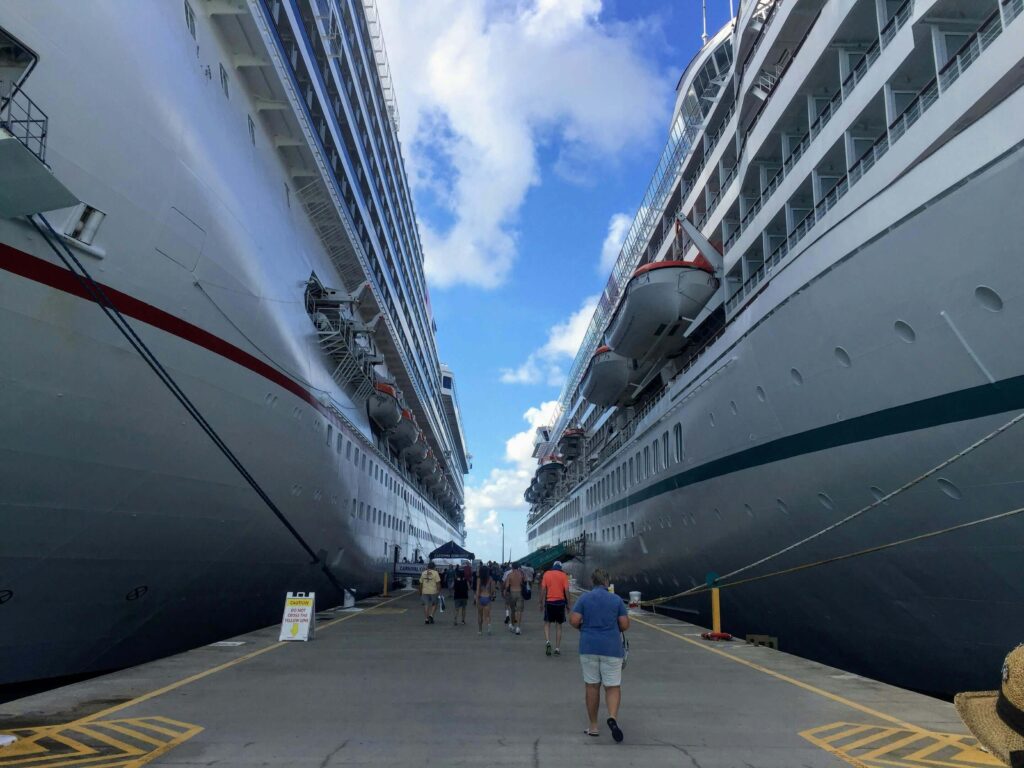
So the better way to frame this now is simple: the outside-the-bridge mega-port idea has been stopped, but Port Tampa Bay is still planning for a busier future. For travelers, that means Tampa remains a growing and increasingly important Gulf Coast cruise port, even if the Skyway limitation still shapes what kinds of ships can realistically sail from there.
7) Could This Idea Come Back In Another Form?
In theory, people can always pitch a new site, a new version of a port plan, or a different way of trying to expand cruise operations around Tampa Bay.
But this specific proposal ran into exactly the kind of resistance that is hardest to overcome: organized local opposition, environmental scrutiny, and a new law that directly strengthens protections in the area at the center of the plan. That’s a very different situation from a project that simply got delayed or is waiting on routine approvals.
So while it’s always smart to leave a little room for future twists, the more accurate way to describe this proposal right now is not “pending” or “still developing.” It’s that the plan, as introduced, has effectively been stopped.
Recommended reading: Norwegian Cruise Line Cancels Multiple Sailings in Major Ship Shake-Up
8) FAQ: Quick Answers For Cruisers
Is The New Cruise Port Near Tampa Still Happening?
No. As things stand now, the proposal has effectively been blocked after Governor Ron DeSantis signed SB 302, which restricts the dredging and filling that would have been needed for the project.
Where Was The Port Supposed To Go?
The proposed site was in Manatee County on the Gulf side of the Sunshine Skyway Bridge, on the Knott-Cowen tract near the Terra Ceia Aquatic Preserve and Rattlesnake Key.
Why Was The Location Such A Big Deal?
Because the site would have been outside the bridge bottleneck that limits what size ships can reach Port Tampa Bay. That was the whole reason the proposal got so much attention in the first place.
Why Did So Many People Oppose It?
Opponents said a major cruise terminal in that area could harm sensitive habitat, affect water quality, increase vessel traffic, and disrupt the broader health of the preserve and nearby waters. The proposal quickly drew protests and petitions from residents and environmental advocates.
Is Cruise Growth In The Tampa Area Still Happening?
Yes. Even though the proposed Manatee County terminal was blocked, Port Tampa Bay says cruise demand continues to grow and its current terminals are nearing capacity. The port is planning future expansion, and recent reporting has identified that as plans for a fourth cruise terminal.
What’s The Bottom Line?
This started as an eye-catching idea that could have changed the cruise map for Florida’s Gulf Coast. But after the backlash, the legislative fight, and the governor’s signature on SB 302, it now looks much more like a proposal that came and went than one that is on its way to becoming a real port.
But Tampa’s cruise market is still growing — just through Port Tampa Bay’s own expansion plans, not this blocked Gulf-side terminal.
Today’s Top Cruise Deals
See today’s best deals from ALL travel agents