For the second time in just three months, a cruise ship has arrived at an Alaska port with a dead fin whale on its bow.
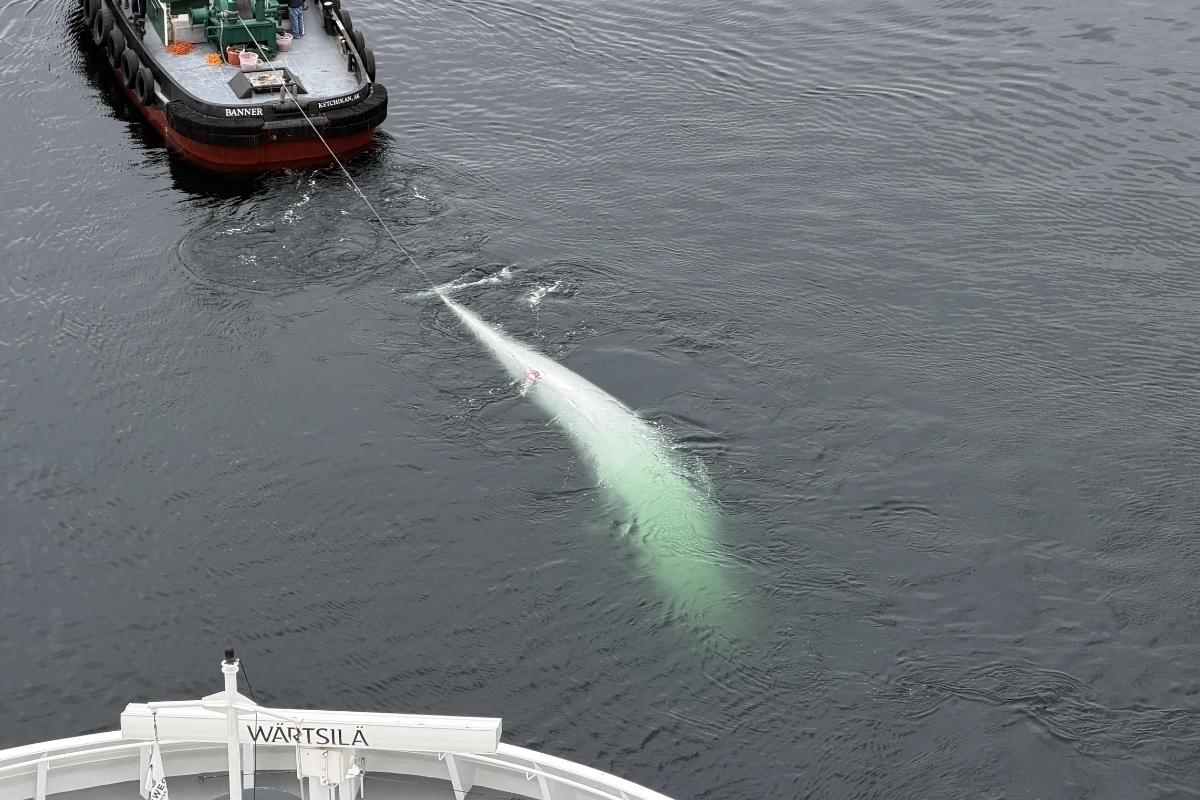
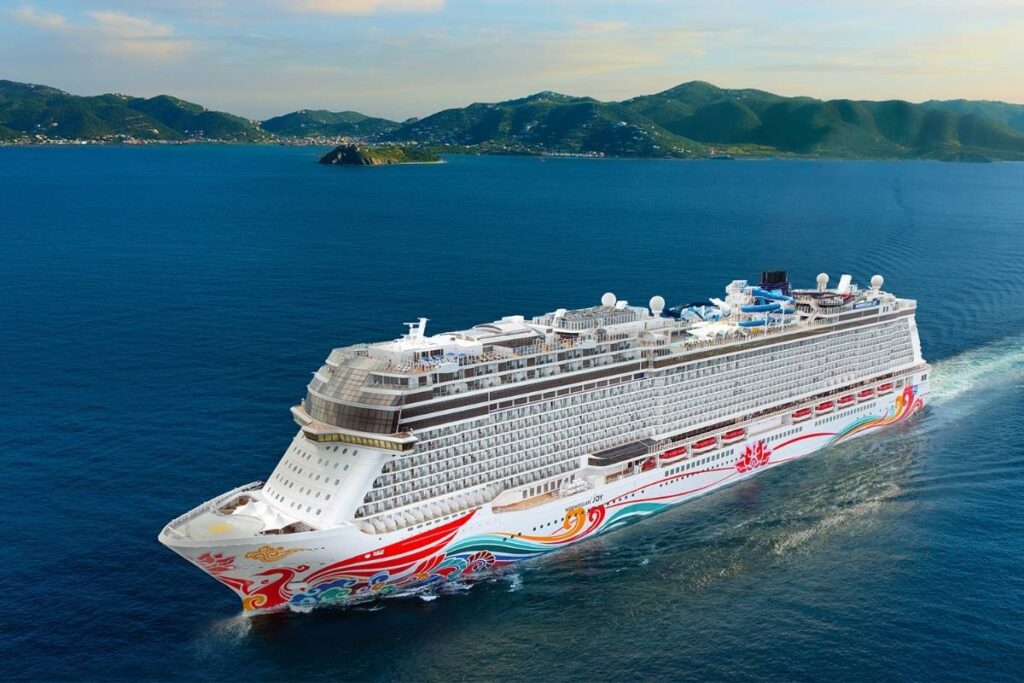
Norwegian Joy was approaching Sitka on Thursday, September 17, when the whale was discovered at the front of the ship. The discovery prevented the vessel from heading straight to the terminal while authorities responded and removed the animal.
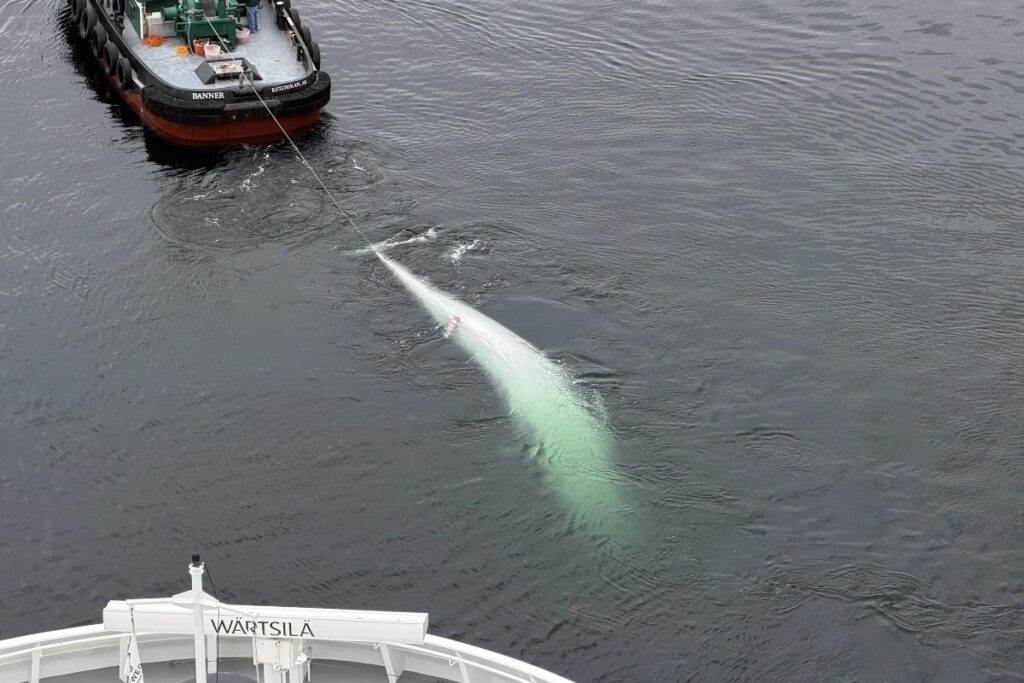
Norwegian Joy eventually reached the Sitka Sound Cruise Terminal around three hours later than scheduled.
NOAA later confirmed that the whale was a 57.5-foot adult male fin whale. Early reports had suggested it was smaller and possibly a juvenile, but those details changed after officials examined the animal more closely.
What isn’t yet clear is exactly how the whale ended up there.
Finding it on Norwegian Joy’s bow doesn’t establish whether the whale was alive when contact occurred, where that contact happened, or whether a collision caused its death.
NOAA said the official cause of death had not been released, and its Office of Law Enforcement was investigating.
Passengers Were Left Waiting Outside Sitka
Passengers expecting to spend the morning exploring Sitka instead found themselves waiting offshore while authorities dealt with the whale.
The ship was around two miles from shore as teams from the U.S. Coast Guard, NOAA, the Alaska Marine Mammal Stranding Network and a local tugboat worked to remove the animal.
Passenger Lee Page told local radio station KCAW that the captain made an announcement explaining there was an issue involving a whale at the front of the ship. Guests were told authorities needed to inspect the situation before Norwegian Joy could enter port.
Page, who was visiting Alaska for the first time, summed up just how unexpected the morning had been.
“A whale strike… wasn’t on my bingo card.”
He said passengers were given little additional information while they remained offshore waiting to enter Sitka.
Norwegian Cruise Line Responds
Norwegian Cruise Line said it was cooperating with authorities and wildlife experts as they worked to determine what happened.
In a written statement, an NCL spokesperson said:
“We are deeply saddened by this situation, and we are cooperating with the appropriate authorities and any relevant scientific and wildlife experts as part of the assessment process.”
The spokesperson also said marine conservation is part of Norwegian’s Sail & Sustain program, including its “Caring for Nature” initiative, and that the company works with partners to support and improve understanding of marine ecosystems.
“This is a sobering reminder of the importance of ongoing collaboration among the maritime, scientific and conservation communities. We remain committed to operating responsibly, complying with applicable laws and regulations and supporting efforts that contribute to the long-term health of marine life.”
NOAA Is Still Trying to Determine What Happened
NOAA has since provided more information about the whale, but one of the biggest questions remains unanswered: what actually caused its death?
Officials described the animal as freshly dead when it was removed from Norwegian Joy. A local company attempted to tow the whale onto a nearby beach, but NOAA said it couldn’t be beached because it wasn’t buoyant enough. The carcass was instead secured near the shoreline.
NOAA has been working with the Alaska Marine Mammal Stranding Network to determine whether a necropsy can be carried out. Weather conditions around Sitka also play a part in whether responders can safely examine the animal.
The NOAA Fisheries Office of Law Enforcement is investigating the incident.
NOAA told KCAW there have been 10 documented reports involving cruise ships and possible whale strikes in Alaska since 2001. However, the agency cautioned that not every case was confirmed as a strike, and contact with a ship didn’t necessarily cause the whale’s death in every case.
The true number of whale-vessel collisions is also difficult to establish. NOAA spokesperson Jennifer Angelo told KCAW that some collisions may never be noticed by the crew, while others happen in remote areas or involve carcasses that sink or drift away before they can be found.
Another Cruise Ship Arrived With a Pregnant Whale Just Months Earlier
The Norwegian Joy incident comes just three months after another fin whale was found on the bow of a cruise ship in Alaska.
On June 19, Royal Caribbean’s Ovation of the Seas arrived in Seward with a dead 61-foot adult female fin whale resting on its bulbous bow.
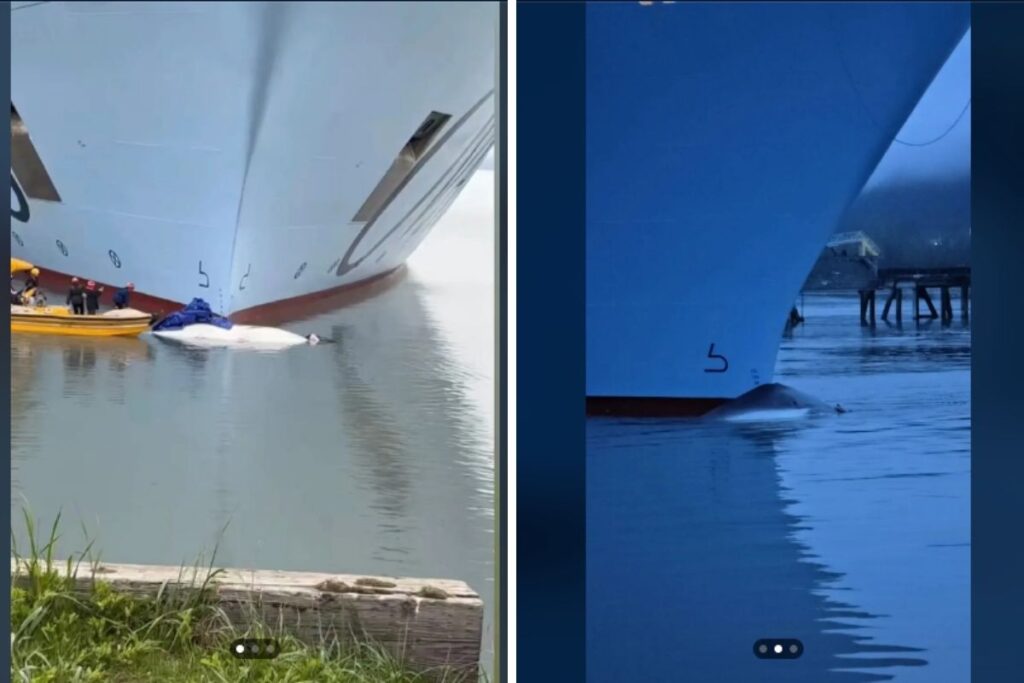
The whale was removed and taken to a nearby beach, where NOAA Fisheries worked with the Alaska SeaLife Center and Alaska Veterinary Pathology Services to carry out a necropsy.
The examination revealed that the whale was pregnant.
NOAA said she was freshly dead and in good nutritional condition, with plenty of blubber and muscle. Preliminary findings showed blunt-force trauma to the jaw, spine and ribs that was consistent with a vessel strike.
The official cause of death was still pending further testing at the time, and NOAA’s law-enforcement investigation remained open.
Royal Caribbean acknowledged that one of its ships had struck a whale while traveling to Seward.
“We take any impact to marine ecosystems very seriously,” the cruise line said in a statement reported by Alaska’s News Source.
Royal Caribbean said the ship immediately reported the incident and that the company was cooperating with NOAA.
After the necropsy, the whale was towed back out to sea, where officials expected the carcass to sink.
The Earlier Death Prompted Calls for Cruise Ships to Slow Down
Five days after the Ovation of the Seas incident, the Center for Biological Diversity sent a letter to Royal Caribbean calling for its cruise ships to slow down in areas where whales are known to be present.
The conservation group asked the cruise line to adopt a policy requiring ships to travel at 10 knots or less through important whale habitat.
Its request wasn’t a new federal speed limit for cruise ships in Alaska. It was a voluntary measure the group wanted Royal Caribbean to introduce across its own operations.
The Center argued that lower speeds could reduce the risk of deadly collisions and pointed to research supporting speed reductions as a way to protect whales.
NOAA also advises mariners to slow down in areas where large whales are likely to be present. The agency says whales can be surprisingly difficult to spot, especially in poor weather or low light, and crews aboard large vessels may not even realize a collision has happened.
NOAA already uses mandatory and voluntary 10-knot speed measures in designated areas along the U.S. East Coast to protect North Atlantic right whales. Those measures are specific to right whale protection areas and don’t apply to Alaska.
Why a Whale Can End Up on a Ship’s Bulbous Bow
The part of Norwegian Joy where the whale was found is known as the bulbous bow. It’s a rounded section that sticks out from the front of the ship below the waterline and is designed to improve how efficiently a vessel moves through the water.
Because it sits underwater, anything caught against it may not be visible from the bridge.
There have been previous cases in Alaska where whales remained pinned to the bulbous bows of large ships until the vessels slowed down or reached port.
A study of reported whale-vessel collisions in Alaska documented five dead whales found caught on bulbous bows between 1978 and 2011, including whales carried by cruise ships, an oil tanker and a container ship.
In one documented cruise ship case, crew members on the bridge didn’t feel the collision. A slight vibration was noticed elsewhere on the ship before a passenger spotted the whale on the bow.
Finding a whale in that position also doesn’t automatically establish when the animal died. Previous investigations in Alaska have shown that necropsies and other evidence may be needed to determine whether injuries happened before or after death.
Related Posts:
- Norwegian Cruise Line Just Changed Two Big Entertainment Rules — And One Comes With a Hefty Fee
- Norwegian Cruise Line Makes Two Guest-Friendly Changes To Cruise Packages
Today’s Top Cruise Deals
See today’s best deals from ALL travel agents