You can go on plenty of cruises without ever saying the word “starboard” out loud.
But the second a crew member tells you your cabin is on the port side, or you’re trying to work out where to stand for sailaway, your brain can suddenly go blank and forget the difference between left and right.

I still do the little mental check on day one sometimes. Not because it’s especially hard, but because cruise ships have a way of making even simple directions feel weirdly complicated.
Once you know a couple of easy memory tricks, though, it gets much easier.
Recommended reading: 8 Reasons You’ll Regret Not Checking In Early for Your Cruise
Why Port and Starboard Confuse So Many Cruisers
On land, left and right feel obvious.
On a ship, you’re constantly turning around, stepping out of elevators, doubling back for coffee, and trying to remember whether the theater was past the casino or before it. The moment you turn, your own left and right change. Port and starboard don’t.
That’s the whole reason those words exist. They stay fixed no matter where you’re standing or which way you’re facing.
So if you’ve ever nodded like you understood, then quietly thought, “Wait… which side is that again?” you’re in very good company.
What Port and Starboard Actually Mean
When you’re facing the front of the ship (also known as the bow), port is the left side and starboard is the right. (And in case you were wondering, the back of the ship is called the stern!)
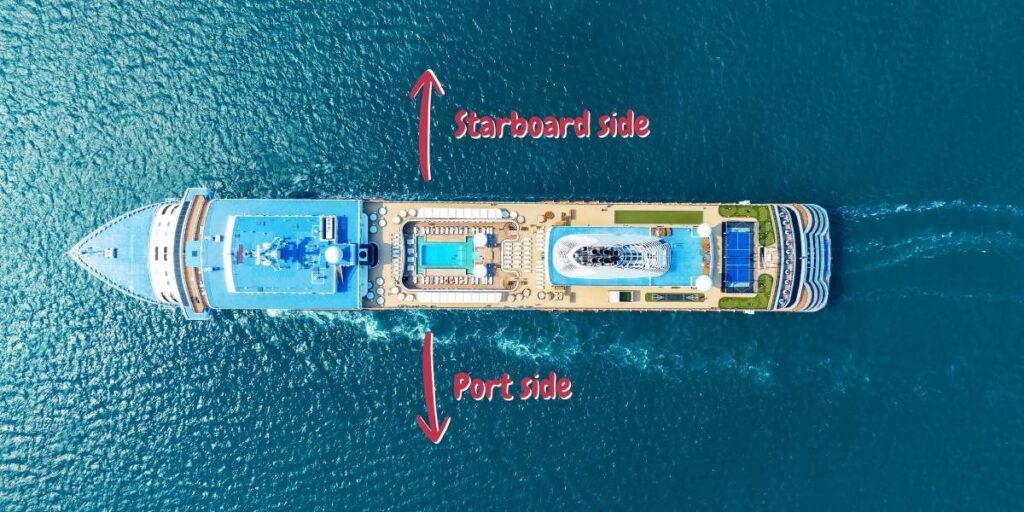
That’s the key bit: you picture yourself facing forward toward the bow. Once you do that, the terms stay consistent.
It also explains why cruise ships use these words instead of just saying left and right. If one person is facing the pool and another is facing the buffet, “left” is suddenly not very useful. Port and starboard avoid that mess.
Suggested reading: 20 Free Things You Can Get from Guest Services on a Cruise (Just Ask!)
The Easiest Ways to Remember Port and Starboard
Here are some of the easiest ways to remember port and starboard on a cruise ship.
1. Port and Left Both Have Four Letters
This is still the best-known memory trick, and probably the easiest one to use in real life. You don’t need to remember a story, a color, or a bit of ship history.
You just count the letters. Port has four. Left has four. Once that clicks, you’ve already solved the problem, because starboard automatically becomes the other side.
It works especially well onboard because it’s quick. If a crew member gives you directions or you’re glancing at a deck plan in a hurry, this is the kind of trick your brain can grab instantly.
2. Count the Two Rs in Starboard
This one works better when you count the Rs. Starboard has two Rs, which can help you remember R for right. That makes it more useful than just noticing that both words contain the same letter, because port has an R too.
It’s still not as clean as the four-letter trick, but some people remember number patterns more easily than word length. If that sounds like you, two Rs in starboard = right side can be a handy backup mnemonic.
3. P is Closer to L, And S is Closer to R, in the Alphabet
This one is for people who like patterns.
P in port feels closer to L in left, while S in starboard feels closer to R in right. It’s not the kind of trick everyone will love straight away, but if your brain enjoys matching letters and noticing little links, it can be surprisingly memorable.
Sometimes the oddest memory devices are the ones that stick, simply because they’re unusual enough to stand out.
4. Think of Port Wine Being Red
This is one of the more traditional nautical memory tricks.
The port side of a ship is associated with a red navigation light, while starboard is associated with green. Some ship signage may also use these colors to designate port and starboard.
So if you picture port wine, which is red, that gives you a useful color link. You can also remember this sentence: “There is no RED PORT LEFT in the bottle.”
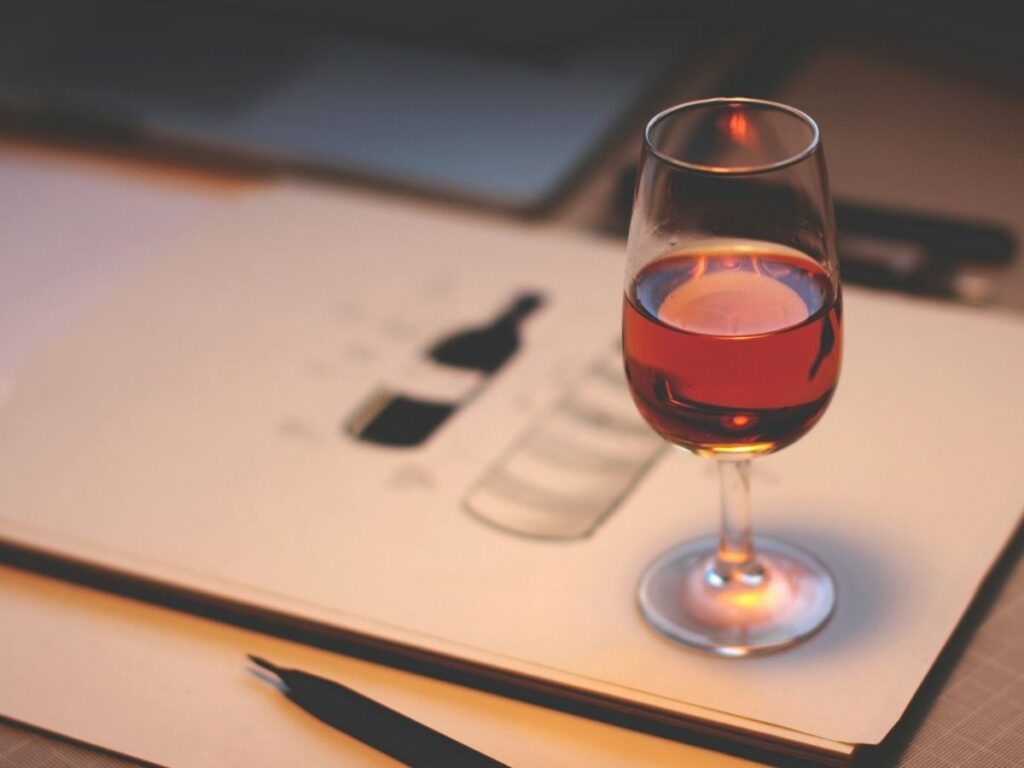
It’s a good option for visual thinkers, especially people who remember colors more easily than letters or word patterns.
5. Use Your Watch as a Port-Side Reminder
If you wear your watch on your left wrist, think about buying new watches in ports of call as a way to remember that the port side is the left side. The more personal a memory trick feels, the more likely you are to remember it when you actually need it.
6. Use the Old Ship-History Trick
If you prefer little stories to letter games, this one may be more your style.
The word starboard comes from the Anglo-Saxon word stéorbord, with ‘stéor’ meaning steer and ‘bord’ meaning the side of the boat. Basically starboard means the side used for steering.
Long before ships had a centered rudder, they were often guided with a steering oar fixed to the right-hand side of the vessel, partly because most sailors were right-handed. Over time, that steering side became known as starboard.
The left side was the opposite side of the ship, kept clearer for loading and coming alongside a harbor. That side was first known by older names such as larboard, but because larboard sounded too much like starboard, sailors gradually shifted to port instead.
So if you want the simple version to remember, it’s this: starboard was the steering side on the right, and port became the docking side on the left. For some people, that’s much easier to remember than a word puzzle because it feels like there’s a real reason behind it.
7. Only Memorize One Side
This may be the smartest tip of all — and one you’ve probably already picked up on.
Instead of trying to learn both words separately, just focus on one. If you remember that port means left, then you don’t have to do much else. Starboard is simply the other side.
That takes a lot of pressure off because you’re not trying to juggle too much at once. In practice, this is often how people remember it for good. They lock in one answer, then let the second one follow naturally.
That last approach is probably the most useful overall. Pick the trick that feels easiest, use it a few times before your cruise, and don’t overcomplicate it. If you try to remember every single method at once, you may end up confusing yourself more instead of less.
Related reading: What Cruise Lines Don’t Explain About Cabin Types (But You Need to Know)
When It Actually Helps to Know
This isn’t just one of those cruise facts that sounds nice in a trivia quiz.
It can help when you’re reading deck plans, listening to crew directions, figuring out which side your cabin is on, or trying to work out where the better view might be as you sail into a port.
It also makes the ship feel less confusing much faster. On that first day, every hallway can feel the same, and every deck can feel one level away from where you thought you were. Knowing port and starboard won’t magically stop you getting turned around, but it does help you feel like you’ve got your bearings.
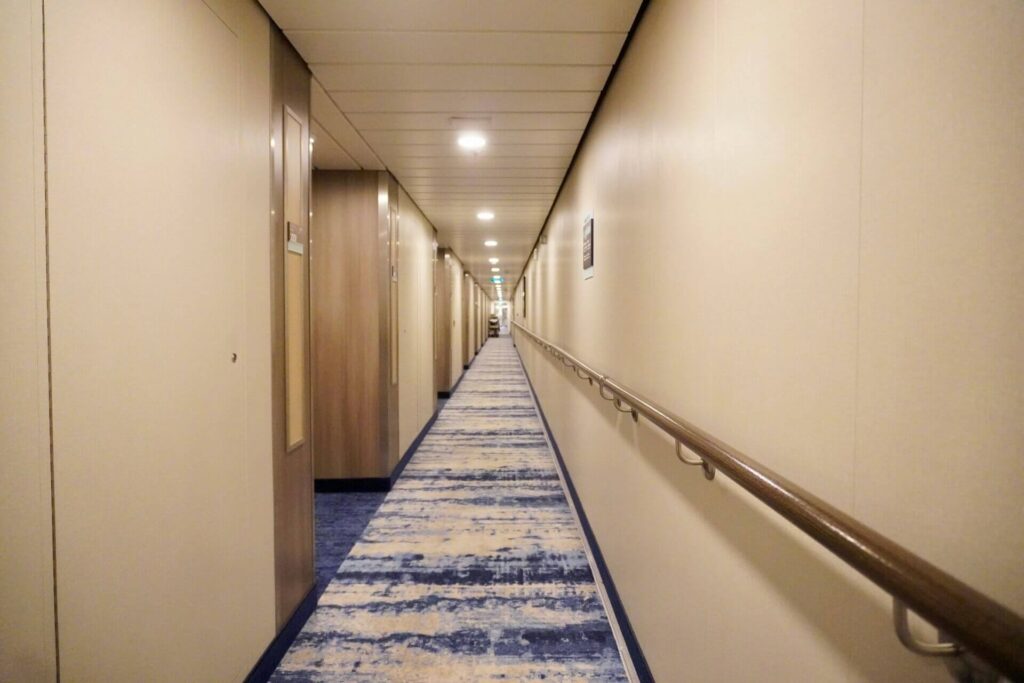
And on a big ship, that’s no small thing.
Final Word
You don’t need to memorize every trick in this guide. Just pick the one that feels easiest, use it a couple of times, and let it become second nature.
For a lot of people, that will be the four-letter trick. But if the watch idea feels more natural, use that. If color sticks in your mind better, go with that. If you prefer a little nautical history, the starboard origin story may be the one that stays with you.
That way, the next time someone tells you the soft-serve ice cream is on the port side, you won’t head off the wrong way, realize too late you’ve missed it, and have to backtrack through half the ship while your cone-free dignity melts faster than the ice cream would have.
Today’s Top Cruise Deals
See today’s best deals from ALL travel agents
You Might Also Like…



Thanks for reading!
I'm Kat, and I've been cruising for as long as I can remember — now I get to carry on the tradition with my own family!
If you enjoy my cruise tips, be sure to follow me on social media for more...