A Pennsylvania man has filed suit against Royal Caribbean Cruises Ltd., saying a fall on the ship’s FlowRider surf simulator aboard Adventure of the Seas left him with a serious injury and a long list of complications.
What Happened on Adventure of the Seas
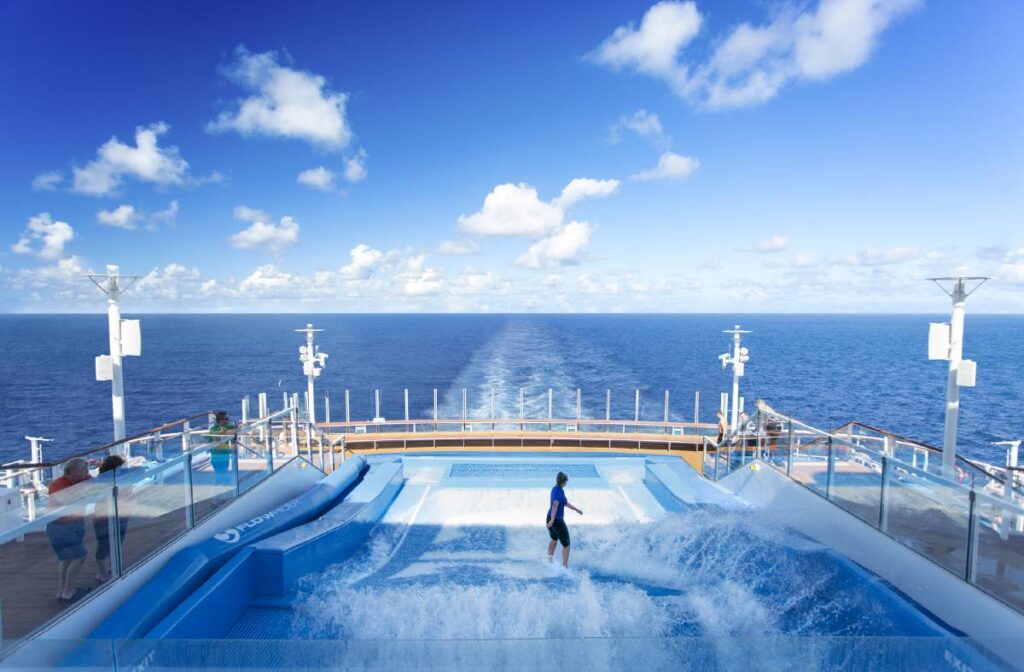
If you’ve ever wandered past FlowRider during sea day, you’ll know the vibe: cheering, wipeouts, and the occasional “I can totally do that” confidence boost. But a lawsuit filed in federal court in Miami says one guest’s turn on the surf simulator ended in a life-changing injury.
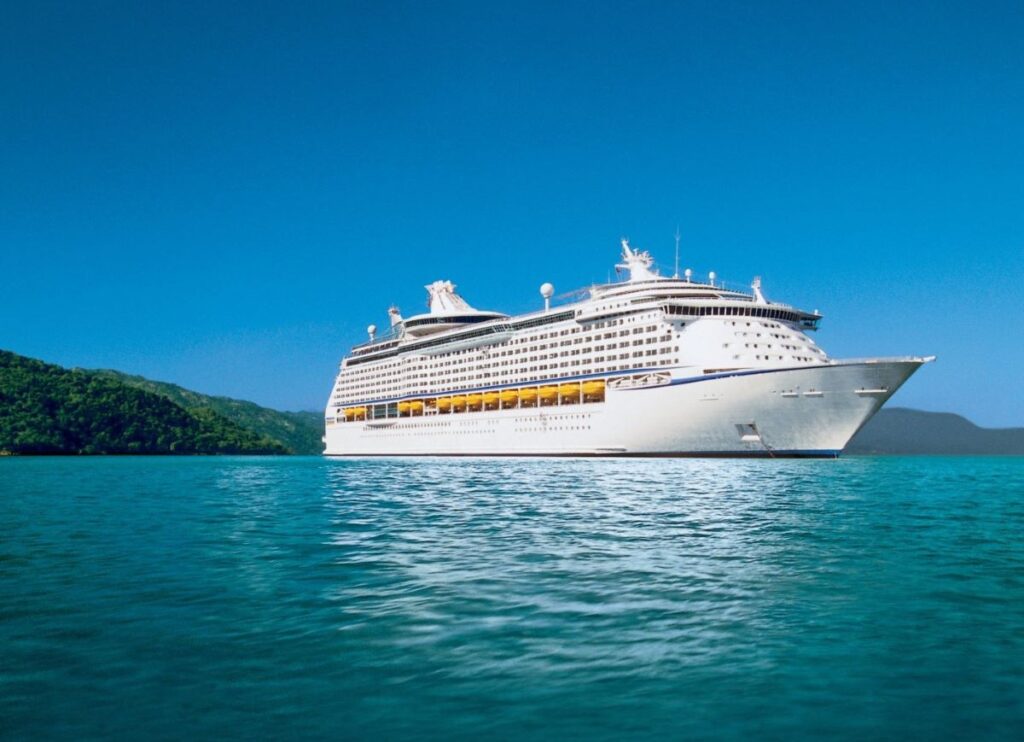
According to the complaint, Jason Keller says he was using the FlowRider Surfing Simulator on Adventure of the Seas on February 3, 2025, when he fell headfirst and fractured his neck. The suit was filed February 9, 2026 in the U.S. District Court for the Southern District of Florida.
Royal Caribbean describes FlowRider as a roughly 40-foot-long surf simulator that uses around 30,000 gallons of rushing water which is exactly why it looks so tempting from the sidelines.
The Injury Claim (And Why This Isn’t a “Normal Wipeout”)
In the filing, Keller alleges the fall caused a neck fracture and that he later suffered multiple strokes, leaving him with left-side weakness. He’s seeking damages for things like pain, mental distress, medical costs, and lost income.
That’s the part that hits hardest because what looks like a quick wipeout can, in rare cases, lead to a recovery that stretches far beyond the cruise.
FlowRider is marketed as fun, and it often is, but head and neck injuries are exactly why the attraction comes with strong warning language and a waiver process (more on that below).
What the Lawsuit Says Royal Caribbean Did Wrong
The key theme in the lawsuit is negligence — not just “I got hurt,” but “this was preventable.”
Based on the complaint details reported publicly, Keller claims Royal Caribbean failed to properly instruct, supervise, and assist guests using the attraction.
The suit also alleges something more detailed: that the FlowRider on Adventure of the Seas is not the same as a “standard” setup because it was shortened to fit the ship, and that the shorter run makes an already risky activity even riskier.
Royal Caribbean has not publicly commented on the lawsuit in the reporting referenced above, and the claims in the complaint have not been proven in court.
The Onboard Medical Claim
The lawsuit doesn’t stop at the fall itself. Keller also alleges that after the incident he went to the ship’s medical center and was told he did not have a neck fracture but later learned he did and that the delay in diagnosis worsened his injury.
FlowRider Safety Rules, Restrictions, and Waivers (What Guests Agree to)
Before we get to the “should I still try it?” part, it helps to talk about how FlowRider is typically run onboard because a lot of passengers don’t learn the rules until they’re already in line.
Waivers are required
Royal Caribbean’s own FAQ states that guests must sign waivers to ride FlowRider, and that the waiver can be signed at the sports desk. Royal Caribbean also has an online waiver portal for some sailings.
Height requirements are real (and different for bodyboard vs stand-up)
Royal Caribbean’s cruise planner pages list minimum heights of 52 inches for bodyboarding and 58 inches for stand-up surfing.
Under-12 supervision
On Royal Caribbean’s booking pages for FlowRider sessions/lessons, it states that children under 12 must be accompanied by a parent or legal guardian.
“High-risk” isn’t just marketing language
In reporting about this lawsuit, Royal Caribbean’s FlowRider is described as a “high-risk recreational activity,” with warnings that injuries can include head, neck, and back injuries and even severe outcomes. That language is one reason waivers exist in the first place.
Practical rule of thumb
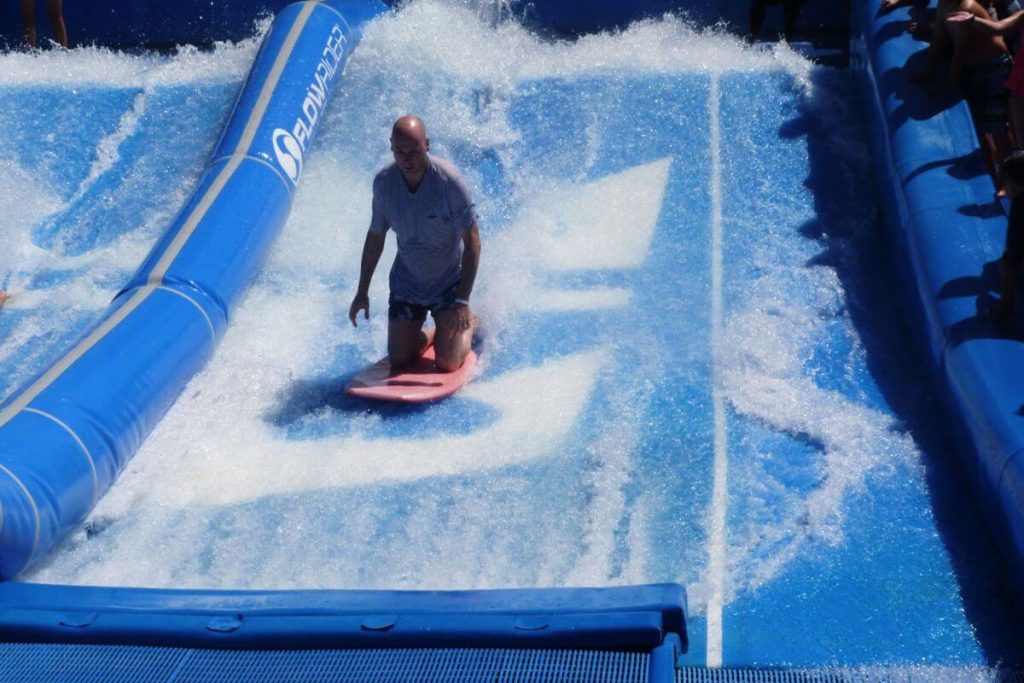
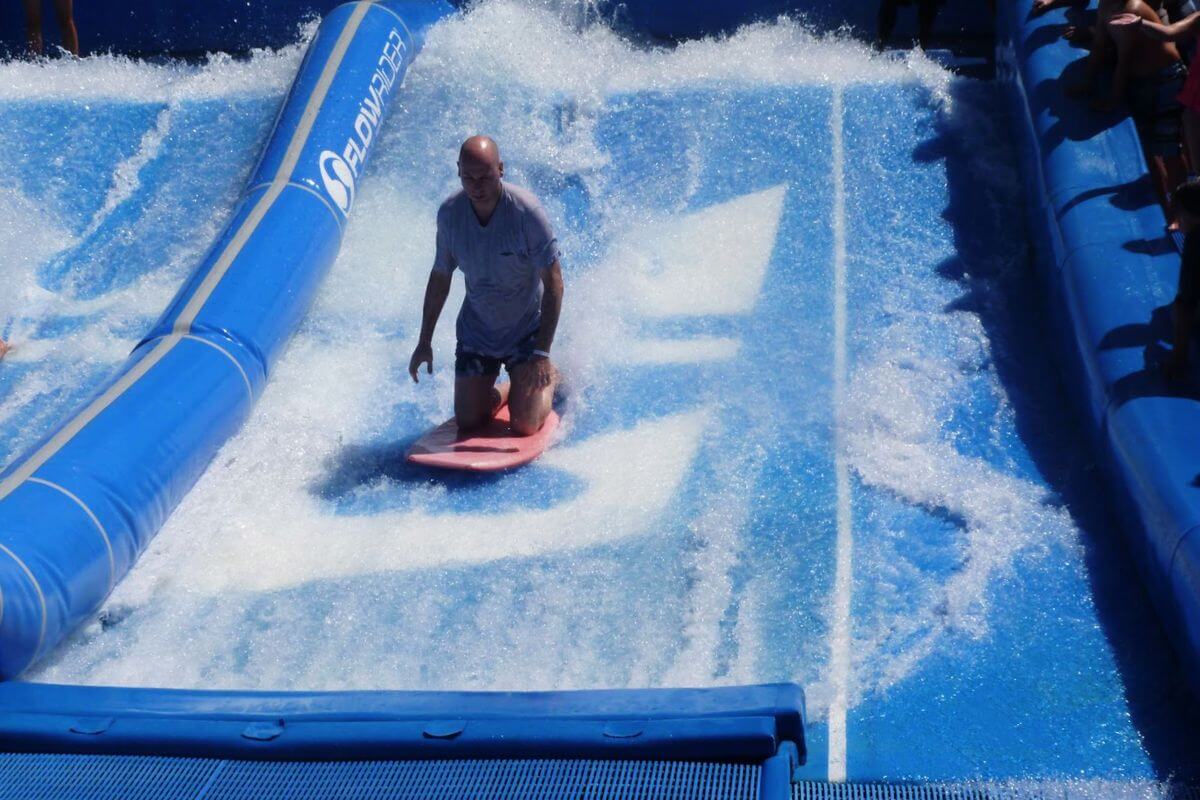
If you’re brand new: start on the bodyboard (kneeling/lying), watch a few rounds first, and don’t let a crowd egg you into trying stand-up in your first two minutes.
What This Means for Cruisers Who Still Want to Try FlowRider
A case like this can make FlowRider sound like a hard “no,” but most cruisers who try it walk away with nothing worse than a bruised ego. The bigger takeaway is that it’s not a gentle amusement-park ride — it’s a sport simulator on a moving ship.
If you want to try it, here’s a recommended checklist:
- Sign the waiver early. Do it at the sports desk (or online if your sailing offers it) so you’re not stuck leaving the line.
- Start with the bodyboard session. It’s the usual entry point, and it helps you learn how the water feels before you add standing.
- Ask for the quick safety rundown. Staff give instructions all day, but it’s okay to say, “Can you remind me where people usually catch an edge?”
- Watch the wipeouts. You’ll learn the common mistakes in five minutes.
- Stop if anything feels off. Neck pain, tingling, dizziness, the “I just got my bell rung” feeling — that’s not something to tough out so you can get one more go.
- Don’t mix it with vacation bravery. If you’re already sore, tired, or not steady on your feet, it’s fine to skip it.
What This Could Mean for Cruising Going Forward
Even though this lawsuit is still only allegations, cases like this can ripple beyond one sailing by nudging cruise lines to make “extreme” deck attractions feel more like organized sport sessions than casual drop-in activities. Royal Caribbean already makes it clear that “Waivers are required for all guests wishing to ride the Flowrider®,” and says they can be signed at the sports desk.
In the future, the industry could lean into more prominent pre-ride messaging such as clearer signage, more frequent verbal reminders, and tighter control over who is in which session because highly visible incidents tend to raise questions about whether guests truly understood the risk level before stepping on.
Reporting on this case also notes the FlowRider is described as a “high-risk recreational activity,” language that may become even more front-and-center if operators want to show they’ve warned guests plainly.
It could also mean stricter enforcement of existing restrictions and a more defined “beginner pathway.” For example, FlowRider offerings commonly separate bodyboarding from stand-up surfing, and minimum height rules can differ depending on which one you’re doing. If cruise lines believe injuries are more likely when first-timers jump ahead too quickly, you may see more structured coaching, closer supervision during open sessions, or a stronger push toward lessons before stand-up attempts.
Finally, when a claim argues that a shipboard version of an attraction differs from a standard setup, it can trigger internal reviews of how these experiences are engineered and operated at sea without implying wrongdoing, just reflecting how risk management typically evolves after a high-profile allegation.
What Happens Next
Because the lawsuit was filed on February 9, 2026, the early stages typically include the cruise line responding to the complaint and the court setting timelines for the case to move forward. Many cases also resolve through motions or settlement discussions, but there’s no way to know at this point what will happen here.
For now, what we have is a set of allegations that will be tested through the legal process — and a reminder that the “cool stuff on the back of the ship” sometimes comes with real risk.
Related Posts:
- 15 Insider Tricks Royal Caribbean Won’t Tell You (But Every Cruiser Should Know)
- Royal Caribbean Ships Ranked Best To Worst (Rated By Reviews)
- 7 Things Royal Caribbean Does Better Than Other Cruise Lines
Today’s Top Cruise Deals
See today’s best deals from ALL travel agents
You Might Also Like…

Thanks for reading!
I'm Kat, and I've been cruising for as long as I can remember — now I get to carry on the tradition with my own family!
If you enjoy my cruise tips, be sure to follow me on social media for more...