A ticket on the Titanic wasn’t one simple price.

Some passengers paid for a basic third-class berth and a chance at a new life across the Atlantic. Others booked suites so grand they came with private deck space, staff, and the kind of luggage situation that makes my overpacked cruise suitcase look humble.
And when you adjust those 1912 ticket prices for modern money, the results are a little all over the place.
The cheapest tickets are surprisingly close to what some people might spend on a cruise today. The most expensive suites, on the other hand? Let’s just say they were not for anyone checking the drinks package price twice before clicking “book.”
How Much Were Titanic Tickets In 1912?
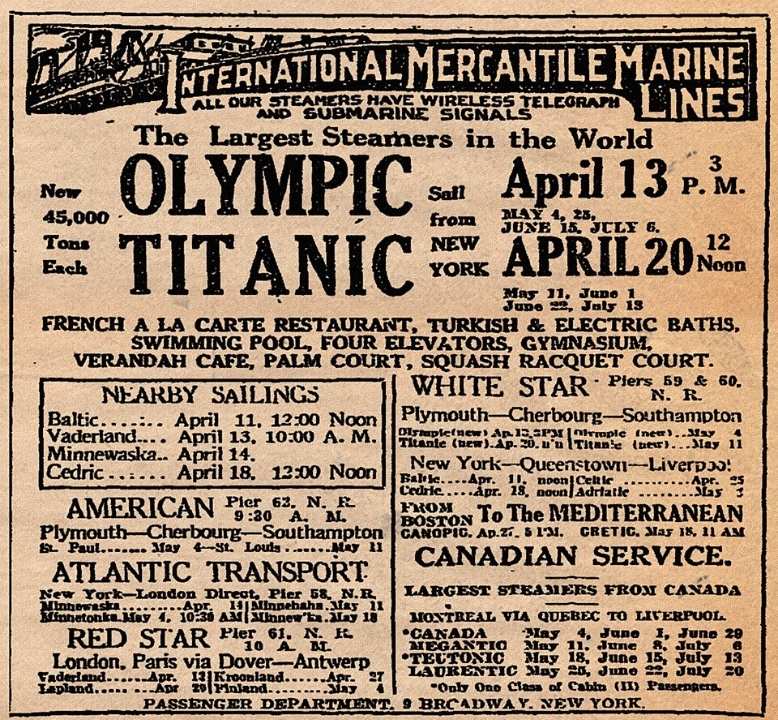
Titanic tickets varied hugely depending on class, cabin type, and how fancy someone wanted their crossing to be.
At the lower end, a third-class ticket cost around £7 in 1912, or about $35 at the time. That was the “budget” option, though calling it cheap feels a bit unfair when you remember many third-class passengers were emigrating, not taking a fun little vacation.
Second class cost about £12, or around $60.
A standard first-class berth started at about £30, or $150.
Then there were the top first-class suites, which could reach £870. In 1912 money, that was roughly $4,350. For context, that’s not “treat yourself to a balcony cabin” money. That’s “I may have a valet and several trunks” money.
Here’s the simple version:
| Class | 1912 Price In Pounds | 1912 Price In Dollars |
|---|---|---|
| First-Class Suite | £870 | $4,350 |
| First-Class Berth | £30 | $150 |
| Second Class | £12 | $60 |
| Third Class | £7 | $35 |
The spread is what makes Titanic pricing so interesting. One ship was carrying people who had paid the equivalent of a modest modern trip, and others who had paid luxury-suite money before the ship had even left Europe.
What Those Prices Would Be Worth Today
This is where the numbers get fun.
Inflation calculators don’t all give the same answer, especially when you’re stretching all the way back to 1912. A pound from that era can be measured by consumer prices, wages, economic share, or simple buying power. Each method tells a slightly different story.
For this article, I’m using a rough 2026 CPI-based estimate, where £1 in 1912 is worth about £148 today. Then I’ve converted the modern pound figure into U.S. dollars using a recent exchange rate of about $1.36 to £1.
So, roughly speaking, Titanic ticket prices look like this in today’s money:
| Class | 1912 Price | Approx. 2026 Price In Pounds | Approx. 2026 Price In Dollars |
|---|---|---|---|
| First-Class Suite | £870 | £129,000 | $175,000 |
| First-Class Berth | £30 | £4,450 | $6,050 |
| Second Class | £12 | £1,780 | $2,420 |
| Third Class | £7 | £1,040 | $1,410 |
Either way, the story is the same: third class was pricey but not absurd by modern travel standards, while the best first-class suites were deep into luxury travel territory.
And remember, this wasn’t a month-long voyage with unlimited cocktails, shore excursions, and a thermal suite pass thrown in. It was a transatlantic crossing.
A very famous one, yes. But still one trip.
The Cheapest Titanic Ticket Still Wasn’t Exactly Cheap
The third-class fare is the one that surprises people.
About £7 in 1912 sounds tiny until you remember money worked very differently then. Using the 2026 estimate, that’s around £1,040, or about $1,410 today.
For many third-class passengers, this wasn’t just a fare. It was a life reset. They were leaving homes, jobs, families, and familiar streets behind, often hoping to build a better future in America or Canada.
So while third class is often talked about as the “cheap seats,” it’s worth giving those passengers more credit. Many had likely saved carefully for that ticket. Some were traveling with children. Others were joining relatives who had already crossed the Atlantic.
It was budget travel compared with first class, sure.
But it wasn’t casual.
And Titanic’s third class was better than what many people got on other ships at the time. Passengers had dining rooms, outdoor deck space, and communal rooms. Food was included too, which wasn’t always the case on other liners.
Still, it was a different life onboard.
Third-class passengers didn’t have marble staircases, private promenades, or à la carte dining. They had shared spaces, practical cabins, and a very different view of the same ocean.
If modern cruising has inside cabins and suites with butlers, Titanic had that same gap turned all the way up.
First Class Was Floating Hotel Money
First class on Titanic wasn’t just about getting from Southampton to New York.
It was about arriving with status.
The ship was built to impress wealthy passengers, and White Star Line clearly knew its audience. First-class guests had access to spaces that sound more like a grand hotel than a ship from 1912.
There was a gym, a squash court, Turkish baths, a swimming pool, promenade decks, elegant lounges, and dining rooms that made dinner feel like an event.
Here’s the first-class À La Carte Restaurant onboard:
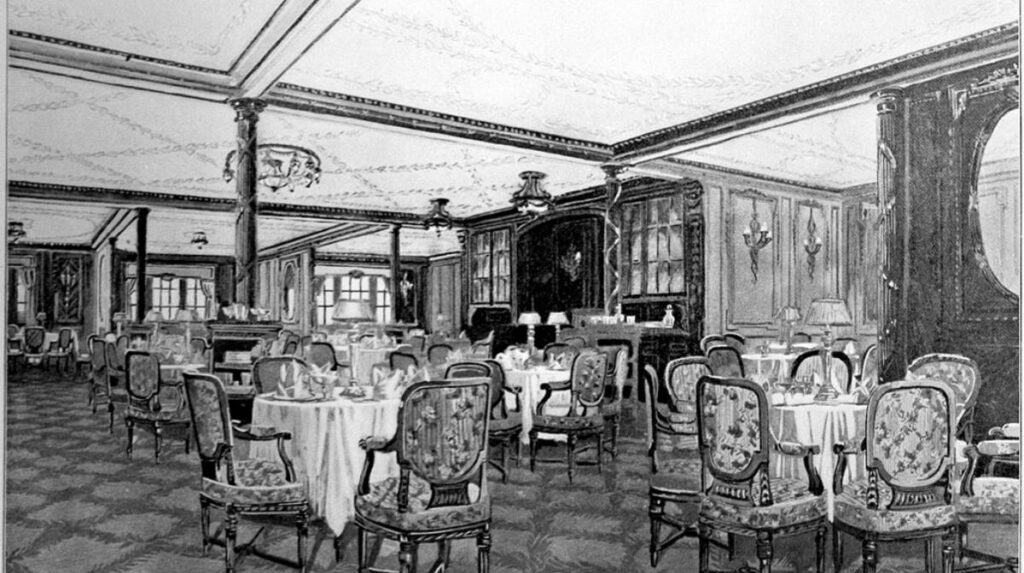
And yes, this was all at sea.
It’s easy to forget how outrageous that would have felt at the time. Today, we’re used to cruise ships with go-kart tracks, robot bartenders, surf simulators, and water parks. But in 1912, putting luxury hotel-style spaces onto an ocean liner was a serious flex.
First-class cabins were decorated to high hotel standards, and the best suites had multiple rooms. Some passengers traveled with maids, valets, nurses, chauffeurs, and enough luggage to make a modern overpacker look restrained.
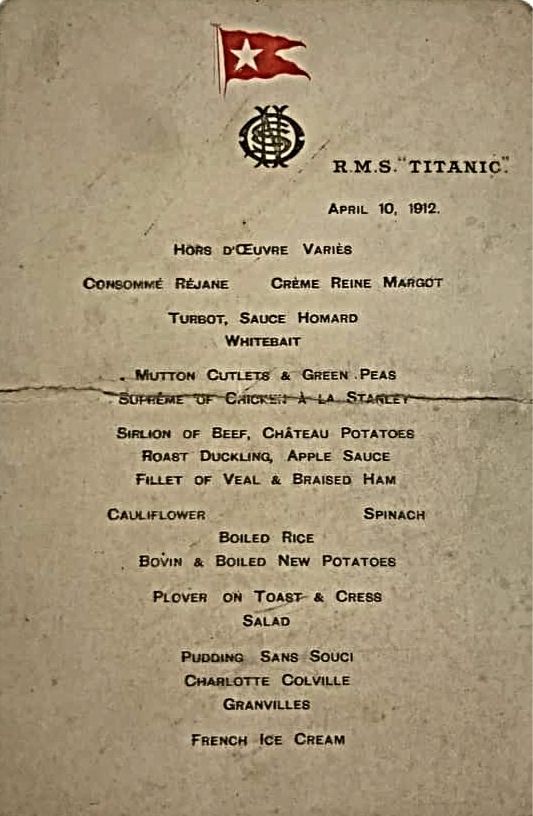
The food was on another level too. First-class menus included things like oysters, canapés, lamb, duckling, cheese boards, and French pastries. Basically, if third class was practical travel, first class was “please pass the oysters while the Atlantic rolls by.”
Here’s an example of a first-class menu:
The Most Expensive Ticket Story Is Even Wilder
Here’s where Titanic pricing gets a little messy.
The top first-class suites were advertised at up to £870, which works out to about £129,000, or roughly $175,000 today using the same 2026 estimate.
But that doesn’t mean every top suite actually sold for that price.
The most expensive ticket believed to have been purchased was closer to £512, or $2,560 in 1912 money. In today’s money, that would be about £76,000, or just over $100,000.
So the simple version is this: the priciest suite could cost around $175,000 in today’s money, but the most expensive ticket we know someone likely paid was closer to $100,000.
Still wild. Just a slightly different flavor of wild.
That suite is linked with Charlotte Drake Cardeza, a wealthy American passenger who was traveling with her 36-year-old son, maid, and valet. She occupied a first-class suite with two bedrooms, a sitting room, and private promenade space.
Cardeza survived the sinking, along with her traveling party. Reports say she left behind 14 trunks of luggage, along with other belongings.
That detail says a lot about what first-class travel meant at the time. This wasn’t a quick trip with one suitcase and a phone charger. Wealthy passengers traveled with wardrobes, staff, formalwear, and the expectation that life onboard would continue at the same standard they enjoyed on land.
That’s what people were paying for.
Not just transportation. A floating version of upper-class life.
Second Class Was The Sneaky Good Deal
Second class might be the most overlooked part of the Titanic price story.
A second-class ticket cost about £12 in 1912. In 2026 money, that’s around £1,780, or roughly $2,420.
That’s not cheap, but compared with first class, it looks almost sensible.
And second class on Titanic was not some gloomy afterthought. Passengers had private cabins, though bathrooms were shared. They also had access to a library, a smoking room for men, promenade space, and a dining room large enough to serve everyone.
The food wasn’t as fancy as first class, but it was still far from sad. Second-class menus included proper cooked meals, desserts, and enough variety to feel respectable.
In modern cruise terms, second class feels a bit like booking a good cabin on a nice ship without paying for the suite lounge, private restaurant, or priority-everything treatment.
You may not get the grandest perks, but you’re still having a comfortable crossing.
And honestly, there’s something appealing about that.
For many passengers, second class probably felt like a smart middle ground.
How Titanic Prices Compare With Modern Cruises
This is where the comparison gets tricky.
Titanic wasn’t a cruise ship in the way we think of cruising now. It was an ocean liner, built to move people across the Atlantic. The ship mattered, of course, but the main goal was transportation.
Modern cruises are different. The ship is often the vacation.
Today, cruise fares can include shows, pools, kids clubs, buffets, dining rooms, port stops, and days designed around fun rather than simply crossing an ocean. Some modern ships are floating resorts, with enough dining and entertainment to keep everyone busy even if they never step ashore.
That makes a straight comparison a bit unfair.
Still, the Titanic numbers are useful because they show something familiar: cruise pricing has always had layers.
There’s the entry-level fare that gets you onboard. There’s the better cabin. There’s the “nice treat” upgrade. Then there’s the suite price that makes you quietly close the browser tab and think about your life choices.
Some things never change.
For example, Cunard’s Queen Mary 2, which still does proper transatlantic crossings, has 2026 fares listed from around $899 per person for an inside stateroom on some sailings. On another 7-night Queen Mary 2 crossing from New York to London, balcony fares have recently been shown at around $2,469, with suites around $5,449.
That makes Titanic’s third-class ticket, at around $1,410 in today’s money, look much less shocking. It sits somewhere between a bargain modern crossing and a nicer balcony-style fare.
A standard first-class berth, at about $6,050 today, also doesn’t feel completely alien when compared with modern suite pricing. It’s expensive, absolutely, but it’s in the same rough neighborhood as some current premium cabins on shorter luxury or transatlantic sailings.
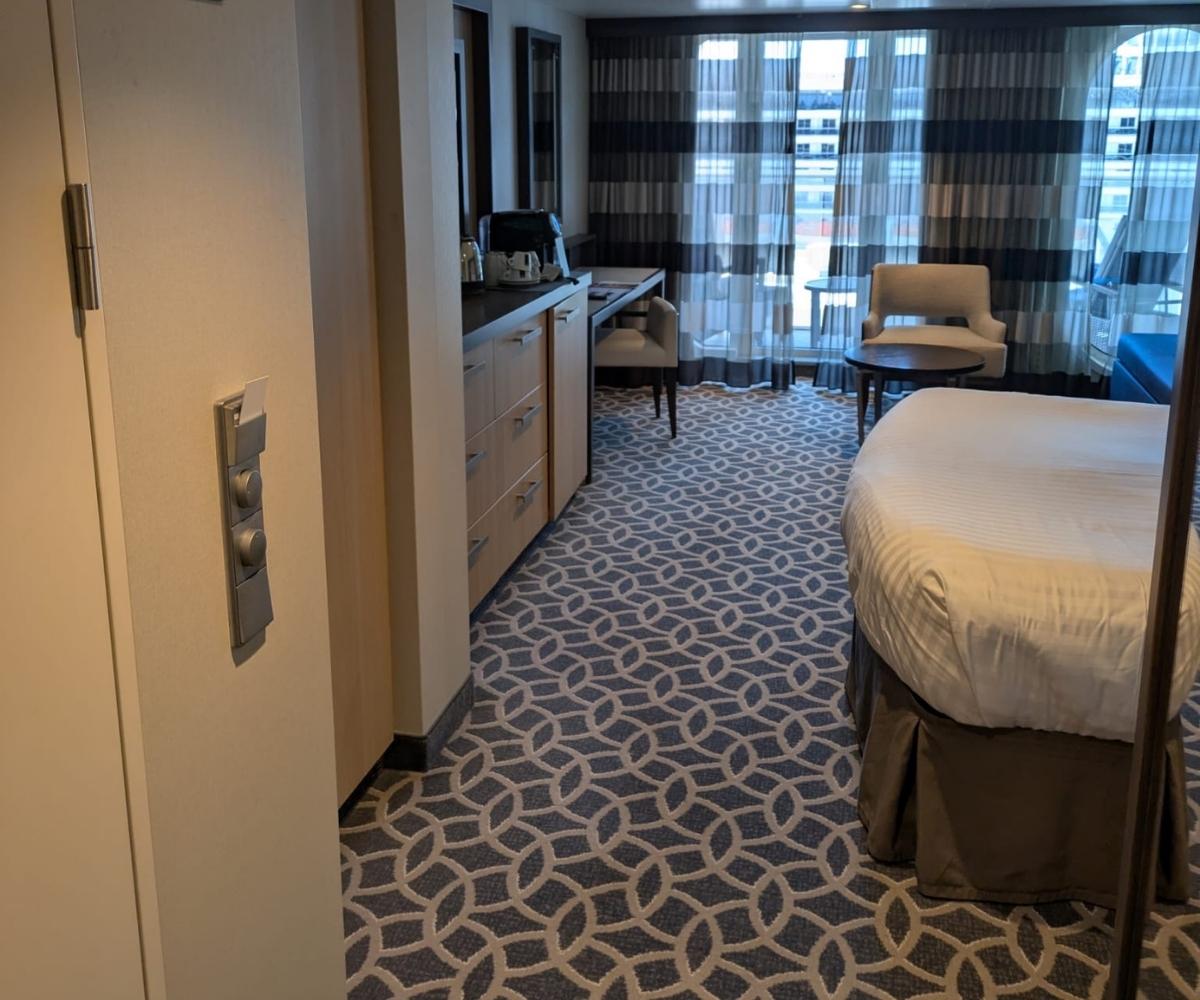
Here’s an example of a first-class suite:
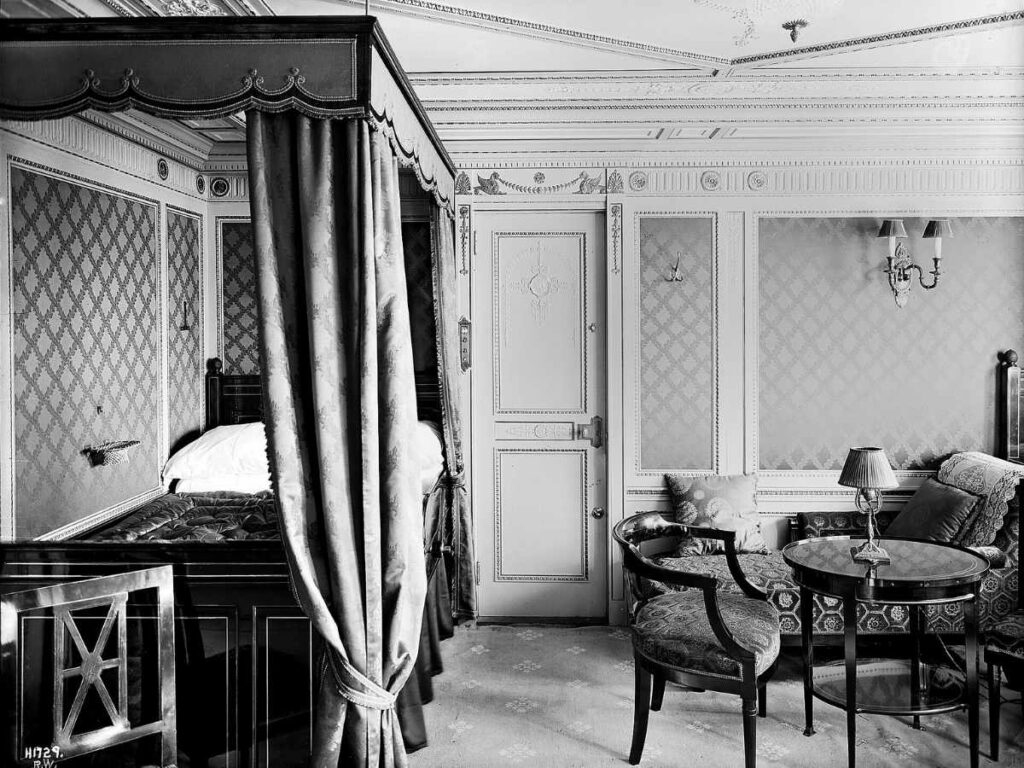
But the top suites? That’s where Titanic pulls away.
A $175,000 equivalent fare puts you firmly into ultra-luxury travel territory. Not “I booked a balcony because it was my anniversary.” More like “my private promenade needs fresh air.”
The Strange Part: Titanic Wasn’t Even Full
Here’s the part that always feels surprising.
Titanic wasn’t full on her maiden voyage.
The ship could carry around 2,566 passengers, or about 3,547 people in total when crew were included, so she had far more space than the 1,317 passengers onboard. Reports vary slightly, but the passenger count is usually given as about 1,317. That included around 324 first-class passengers, 284 second-class passengers, and 709 third-class passengers.
So for all the fame, luxury, and drama around the sailing, there were plenty of empty passenger spaces.
That feels strange now because we think of Titanic as the ultimate sold-out event in ocean travel. The ship was new, huge, and heavily promoted. Yet the maiden voyage wasn’t packed to the brim.
Part of that may have been timing. Atlantic crossings weren’t always full, and not every wealthy traveler wanted to be on a maiden voyage. There were also wider travel patterns and labor issues affecting shipping around that period.
So, Was Titanic Expensive Or Surprisingly Normal?
The honest answer is both.
The cheapest Titanic tickets weren’t as outrageous as many people imagine once you compare them with some modern cruise fares. A third-class ticket at roughly $1,410 in today’s money sounds pricey, but not completely alien to anyone who has priced out a longer sailing.
Second class also looks fairly reasonable when compared with modern travel. It was more comfortable than many people picture, and it came with proper meals, private cabins, and decent public spaces.
First class is where things change.
A standard first-class berth was already expensive, landing around $6,050 in 2026 money. The finest suites were on another planet, especially once you picture the private deck space, staff, formal dining, and trunks of luggage.
That’s the real surprise.
Titanic wasn’t only a ship of millionaires, and it wasn’t only a ship of emigrants packed into steerage. It was both at once.
That’s the part that makes the comparison so interesting. At the lower end, Titanic fares don’t feel wildly different from some cruises people book today. At the very top, though, the price jumps into a completely different world.
Related read: The 11 Most Devastating Cruise Disasters Ever
Today’s Top Cruise Deals
See today’s best deals from ALL travel agents