Imagine going to sleep on a cruise… then waking up and realizing you’re back in Miami.
No storm. No mechanical issue. Just a situation serious enough that the ship quietly changed course in the middle of the night.
If you’ve ever wondered what really happens when a passenger gets seriously ill at sea—who gets called, what the ship can do onboard, and how one emergency can reshape an entire itinerary—this real story breaks it down step by step.
The 3 A.M. Surprise Return
Most cruisers expect the “surprise” part of their trip to be a towel animal… not waking up and realizing the ship is back where it started.
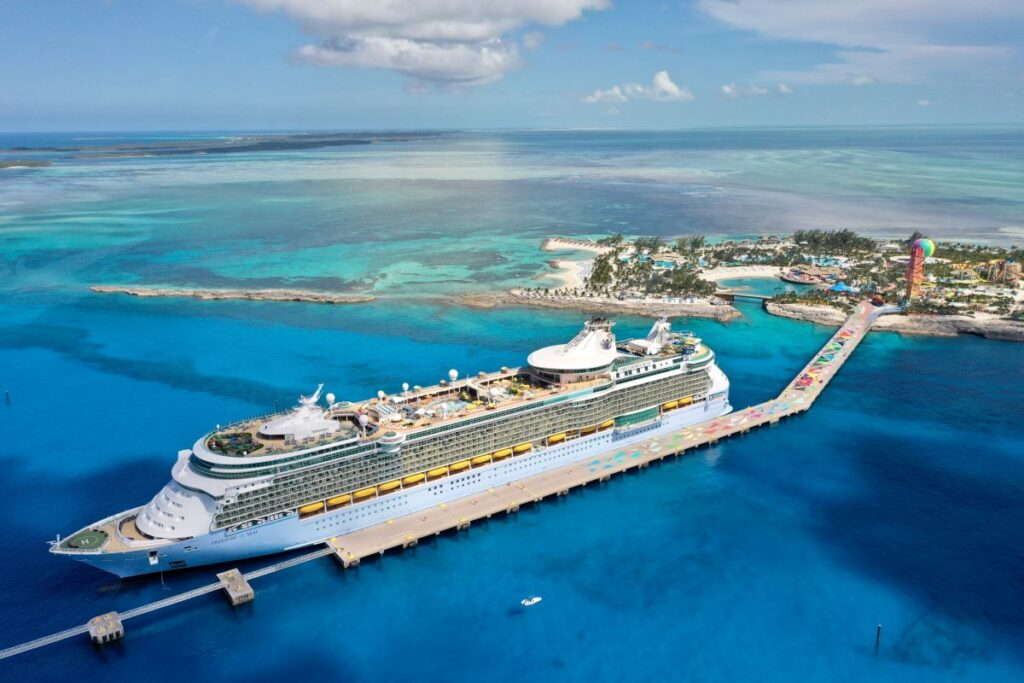
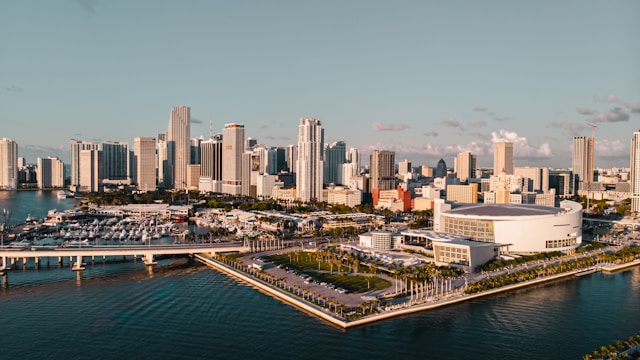
That’s what happened onboard Royal Caribbean’s Freedom of the Seas during a 5-night sailing out of Miami. The ship left Port Miami on January 24, called on Nassau on January 25, and then—early on January 26—returned to Miami at around 3:00 a.m. because one guest needed urgent medical care ashore.
According to reports from onboard, emergency responders met the ship and a passenger was evacuated for hospitalization. A companion (reported to be the guest’s wife) also disembarked with him. Royal Caribbean did not share medical details, which is typical in situations like this.
The biggest ripple for everyone still onboard: that unexpected detour meant the original port plan couldn’t stay intact—leading to a schedule change for the rest of the sailing.
First Steps When Someone Gets Seriously Sick Onboard
If a passenger gets seriously ill at sea, the first few minutes look a lot like any other emergency… just with more obstacles (narrow corridors, moving floors, and a whole lot of people trying not to panic).
Usually it starts with someone alerting crew fast. That could be a travel companion calling for help, a bartender spotting something off, or a guest dialing the ship’s emergency number from the nearest phone. On most ships, crew are trained to respond quickly and take control of the scene—partly to help the guest, and partly to keep the area clear so care isn’t delayed.
The initial goal is simple: figure out what’s happening and stabilize the person. You’ll typically see crew checking basic vitals, asking quick questions (chest pain? trouble breathing? allergies? medications?), and calling the onboard medical team. If the situation is serious, the medical center becomes the next stop—sometimes on foot, sometimes with a wheelchair or stretcher, depending on the guest’s condition and where they are onboard.
Behind the scenes, the ship’s bridge gets updated early. That’s when the “medical event” can shift from onboard treatment to bigger decisions, like speeding up, changing course, or heading back toward port if the ship needs to get the passenger to a hospital as quickly as possible.
What the Ship’s Medical Team Can Actually Do
Onboard medical centers are designed to handle far more than minor issues—but they’re still not the same as a full hospital on land.
What cruise medical teams can do really well is the part that matters most in an emergency: assess quickly, stabilize, and buy time. That can include monitoring vital signs, providing oxygen, starting IV fluids, giving urgent medications, running basic tests, and keeping someone stable while the bridge and shoreside teams figure out the fastest path to higher-level care.
What they usually can’t do is everything a full hospital can: round-the-clock specialists, major surgery capability, advanced imaging like an MRI, and the depth of resources you’d find on land. The onboard team’s job is often to get the situation under control—then decide whether the safest next step is staying the course, a medevac, or a diversion to port.
The Big Decision: Treat Onboard, Medevac, or Divert Back to Port?
When the ship’s medical team decides a guest needs more care than the onboard clinic can provide, the next call boils down this: how fast can you get that person to the right kind of hospital?
Most of the time, it comes down to three paths. The ship can keep going and treat the guest onboard until the next scheduled port. It can divert (change course) to a closer port that can handle the situation. Or it can call for a medevac—a medical evacuation off the ship, often by helicopter hoist or a fast rescue boat—if that’s the quickest safe option.
The doctor’s assessment drives the whole thing: how stable the patient is, what level of care they need, and whether time is measured in hours or minutes. Cruise lines also lean on shoreside medical support when they’re weighing those choices.
Even when a medevac is possible, it’s not “easy mode.” Ship-to-shore evacuations can be logistically challenging and can add risk for an already-ill patient—so the goal is usually the fastest safe route to the right care.
In the Freedom of the Seas case, the ship headed back to Miami so the guest could disembark and get urgent medical attention ashore. That necessary decision then required the itinerary to shift.
Why a Helicopter Rescue Isn’t Always the Answer
When people hear “medical emergency at sea,” they picture a movie scene: a helicopter hovering over the ship, a basket coming down, and the patient whisked away in minutes.
That can happen. But it’s not the default, and it’s not always the safest move.
A helicopter medevac is a coordinated hoist operation. The ship has to steer in a way that helps the pilot, the weather and sea state have to cooperate, and the patient has to be stable enough to move through tight corridors and then up into the helicopter without things going sideways at the worst possible time.
There’s also a simple reality check: “fastest” depends on where the ship is. If you’re relatively close to a major port with hospitals and ambulances ready, turning back can beat waiting for a helicopter crew, setting up the hoist, and flying to the right facility. That’s why diversions like the one on Freedom of the Seas—heading back to Miami so a guest could be hospitalized—happen more often than people think.
What Passengers Usually Notice During a Serious Medical Event
If someone gets seriously ill onboard, most passengers don’t actually see the patient. What they notice is everything around it.
The first clue is often the ship itself. You might feel a change in speed, a different vibration underfoot, or that the ship is making an unusual turn. If you’re up early (or can’t sleep), you’ll see the scenery look “wrong” out the window—lights you didn’t expect, a coastline that suddenly feels too close, or the ship lining up like it’s about to dock when nobody told you it would.
Then there’s the crew energy. More radios. More purposeful walking. Security posted near a stairwell or corridor to keep space clear. Sometimes a small area gets temporarily blocked off so a wheelchair or stretcher can move through without a crowd forming.
As for announcements… it’s a toss-up. You might hear a short message like “we’re responding to a medical emergency,” and that’s it. Or you won’t hear anything until later, when the ship’s plan has already changed. That can feel frustrating in the moment, but there’s a reason details stay minimal.
Privacy: Why Details Stay Vague
Myth vs. Reality
- Myth: “If it’s serious, the captain will explain exactly what happened.”
Reality: Announcements are usually intentionally broad (“medical emergency”) to protect the guest’s privacy and avoid onboard speculation. - Myth: “Cruise lines don’t share details because they’re hiding something.”
Reality: Most of the time it’s about protecting the guest and their family—and keeping misinformation from spreading while facts are still developing. - Myth: “Social media will have the real story.”
Reality: Fellow passengers rarely have full context, and secondhand posts can snowball fast. Trust confirmed updates, and treat everything else as rumor.
The Evacuation Itself
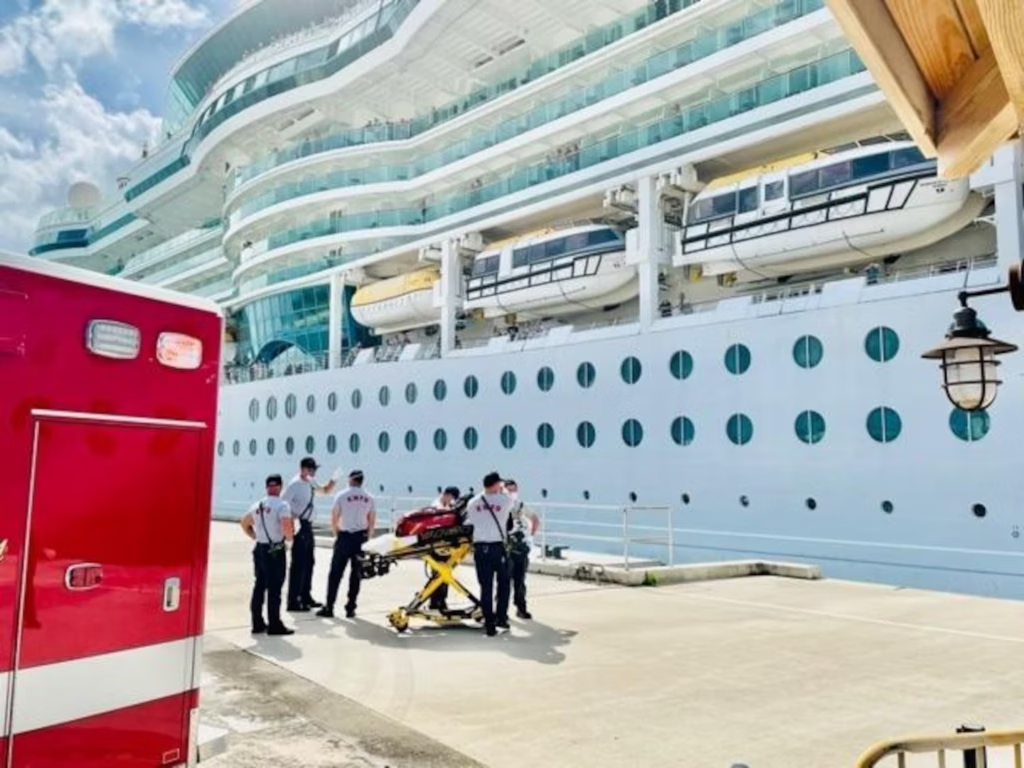
Once the call is made to get a seriously ill passenger off the ship, the whole operation shifts from onboard care to a fast handoff to shoreside emergency medical teams.
On Freedom of the Seas, Royal Caribbean said a guest needed urgent medical attention ashore, so the ship diverted back to Miami. Passengers reported emergency responders met the ship and the guest was transported off on a stretcher and taken away by ambulance.
From a passenger perspective, the “evacuation” moment usually looks controlled and quick at the pier: responders arrive, the ship docks, and crew keep a narrow corridor clear so the medical team can move. If a spouse or travel companion needs to disembark as well, Guest Services typically helps with the practical stuff—documents, essential medications, and the basics that may need to come off immediately.
And here’s the part most people don’t realize until they see it up close: ships can handle a lot onboard. So when a ship does divert and transfer someone to a hospital, it’s usually because the onboard team has stabilized the guest as much as possible and higher-level care is the safest next step.
The Domino Effect: Itinerary Changes After a Diversion
Once a cruise ship turns around for a serious medical situation, the itinerary becomes a giant math problem: distance, time, port slots, and how fast the ship can safely make up lost ground.
In this case, Freedom of the Seas returned to Miami in the early hours of January 26. That detour meant there simply wasn’t enough time left to continue on to George Town, Grand Cayman as planned, so Royal Caribbean cancelled that stop.
So the ship’s schedule got reshuffled into something that actually works:
- a sea day instead of Grand Cayman, and
- a replacement call to Freeport, Grand Bahama Island on Wednesday, January 28.
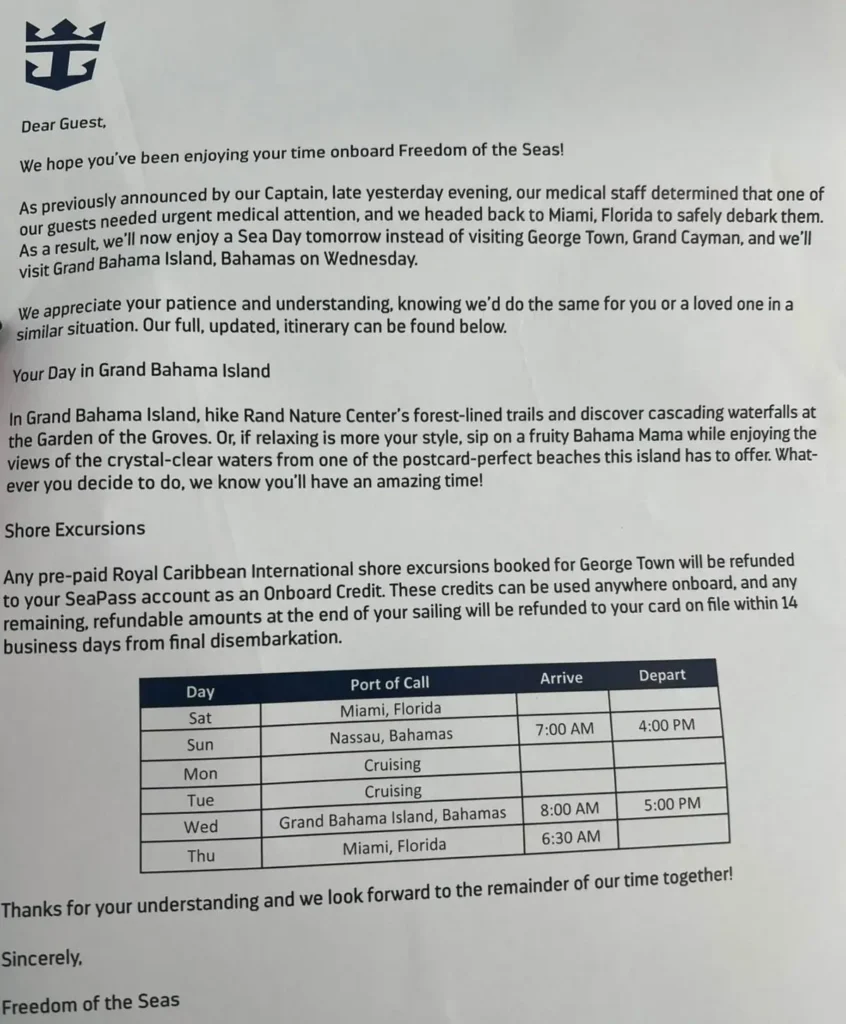
And that’s usually how these changes play out. Cruise lines don’t just pick a random replacement port—they look for something close enough to reach on time, with space to dock, and with a plan that still gets everyone back to the homeport when the cruise is supposed to end.
Refunds, Excursions, and Travel Insurance
When a port gets dropped because of a medical diversion, most guests have the same two questions: “Do I get money back?” and “What happens to my plans?”
Here’s the realistic breakdown:
- Ship-run shore excursions: If you booked your tour through Royal Caribbean and the ship misses that port, you’ll typically receive a refund for the cancelled excursion.
- Independent excursions: This depends on the operator’s rules. Some will refund if you can’t arrive; others won’t. If you booked outside the cruise line, start with the provider and your credit card/travel insurance.
- Port fees and taxes: Many cruisers do see some amount returned when a port is missed, often as an onboard credit—but it’s not always straightforward with “all-in” pricing and how fees are estimated and rolled into fares.
- Extra compensation for a missed port: Don’t assume you’ll get a “sorry about that” credit beyond refunds tied to cancelled items.
Travel insurance tip
If you plan to file a claim (missed-port benefit, delays, etc.), ask Guest Services for a letter confirming the missed port and the reason.
Related read: Texas Family Hit With $13K Medical Bills After Cruise Emergency
How To Prep Before Your Cruise So a Medical Emergency is Less Chaotic
No one gets on a cruise expecting a medical emergency to change the plan. But a few small steps before you sail can make a stressful moment a lot easier to manage—especially if you’re traveling with someone who has ongoing health concerns.
- Keep essential meds in your carry-on, not your checked luggage. Bring a little extra, too (delays happen).
- Save a note on your phone (and/or a small card in your wallet) with allergies, medications, emergency contacts, and any key conditions.
- Know how to reach help fast. Figure out the ship’s emergency number and where the medical center is on day one—before you actually need it.
- If you have travel insurance, screenshot the policy details and emergency contact number.
- If you’re cruising with someone who’s higher-risk, talk through a simple “just in case” plan ahead of time—who keeps the documents, who carries the medications, and who handles the next steps if plans change quickly.
Wrap-Up
Medical emergencies at sea are rare—but when they happen, they move fast. The cruise line’s priority shifts instantly from “vacation schedule” to “get the right care as quickly and safely as possible,” and that can mean anything from onboard stabilization to a medevac, to turning the ship around.
And while the rest of the ship may feel the ripple effects through missed ports and schedule changes, the hope is always the same: that the passenger gets the care they need and makes a full recovery.
Have you ever had a cruise itinerary change because of a medical emergency or diversion? Share what happened in the comments—your tips could help someone else.
Today’s Top Cruise Deals
See today’s best deals from ALL travel agents