Booking a cruise cabin sounds simple… right up until you’re staring down a booking page with dozens of options that read, “bed, bathroom, small couch,” “Inside,” “Ocean view,” “Balcony,” “Suite,” “Spacious,” “Premium,” “Family…” Yet, somehow the prices swing wildly even when the photos barely do.
If you’ve ever wondered, “Am I paying for a better room—or just a better label?” you’re in the right place.
After giving most of these a go myself, I’m going to break down what each cabin type really means, the surprises people don’t see coming until they’re onboard, and the quick checks that help you book the room you’ll actually be happy with. Because, after all, the wrong cabin choice can be the difference between a great trip and a “next time I’ll book differently” trip.
What “Cabin Type” Really Means
When people say “I booked a balcony,” they usually mean one thing: “I’m getting fresh air and a view.” Totally fair.

Cruise lines hear “balcony” and think, “Great—now which kind of balcony did you buy?” Because “cabin type” goes beyond just the label (Inside, Ocean View, Balcony, Suite). It’s the label plus the fine print that decides whether your room feels like a cozy home base… or just the cramped place you sleep between trivia and tacos.
When you’re choosing a cabin type, you’re really choosing a bundle of things: light and view, outdoor access, layout, bed setup, bathroom style, and location on the ship. Two cabins can be the same size on paper and feel totally different because of an odd closet placement, a weird sofa setup, or a “sleeps 4” layout that gets tight fast.
If you’ve ever wondered why two “Balcony” cabins have a big price gap, it’s usually location + balcony style + what’s around that cabin that makes a huge difference.
Now, here’s the booking choice that quietly changes everything: guarantee cabin (often shown as GTY) vs picking an exact cabin number. With a guarantee, you’re saying, “I’m fine with any cabin in this category,” and the cruise line assigns your room later. You might get a perfectly good cabin you’d never have noticed—or you might land in a spot you wouldn’t have picked if you’d seen it on the deck plan. Upgrades can happen, but they’re a bonus, not a plan.
If you choose your exact cabin number, you pay a bit more but you control the stuff that actually affects your day-to-day comfort: quieter hallways, steadier areas of the ship, how close you are to elevators, and avoiding “surprise” locations.
Quick gut-check: do you have any non-negotiables (quiet, low motion, near family, specific deck)? If yes, choosing your cabin is usually worth it.
One more reminder: cruise lines love a fancy label. “Deluxe,” “Premium,” “Family,” “Spa,” “Mini-Suite”… sometimes it means something. Sometimes it’s just a nicer-sounding name. The only way to know is to check the stateroom code, the deck plan, and—if you can—photos/videos of that cabin type on your ship.
Inside Cabins
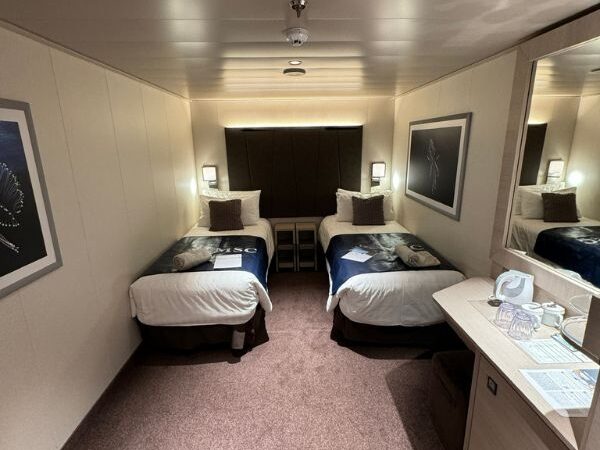
Inside cabins deserve more respect than they get. Yes, they’re usually the lowest-priced option, but they’re also the “I’m here for the ship, not the room” pick—and that logic holds up surprisingly well.
An inside cabin is a stateroom without a window or balcony. You still get the basics: a bed, a private bathroom, storage, a TV, and housekeeping. You’re just skipping natural light, which is exactly why the price drops.
The biggest win here is value. On many sailings, the money you save can cover excursions, specialty dining, Wi-Fi, or a few onboard extras you’ll actually remember. And if you mostly use your cabin to sleep, shower, and change clothes, paying extra for a view you won’t use can feel… unnecessary.
Another underrated perk: sleep. Inside cabins can be wonderfully dark, which makes them great for nappers, late-night show people, and families with kids who still need daytime sleep.
We learned this firsthand when we sailed in an inside cabin with our kids. They actually slept past 7 a.m.—which basically never happens at home. With no natural light creeping in at the crack of dawn, they stayed asleep longer, and the whole morning felt calmer. If you’ve ever started a vacation day with an overtired kid before breakfast, you already know what a win that is.
Location can also work in your favor. Interiors are often available on lower decks and closer to midship, which can feel steadier for some motion-sensitive cruisers. That’s not a magical “inside cabin” feature—it’s a location feature—but interior availability can make it easier to land where you’ll be most comfortable.
The trade-offs are real, though. The lack of natural light can mess with your sense of time, and some people feel the no-window vibe makes the room feel tighter than the square footage suggests. If you want your cabin to feel bigger and easier to live in, a few simple cabin comfort tweaks go a long way.
Inside cabins also come in a few flavors. You’ll see standard interiors, “spacious” interiors, and sometimes “family” interiors with extra sleeping options. On some ships, you’ll also see virtual-view interiors or promenade/atrium-facing interiors where the window looks into an indoor public space—not the ocean.
Ocean View Cabins
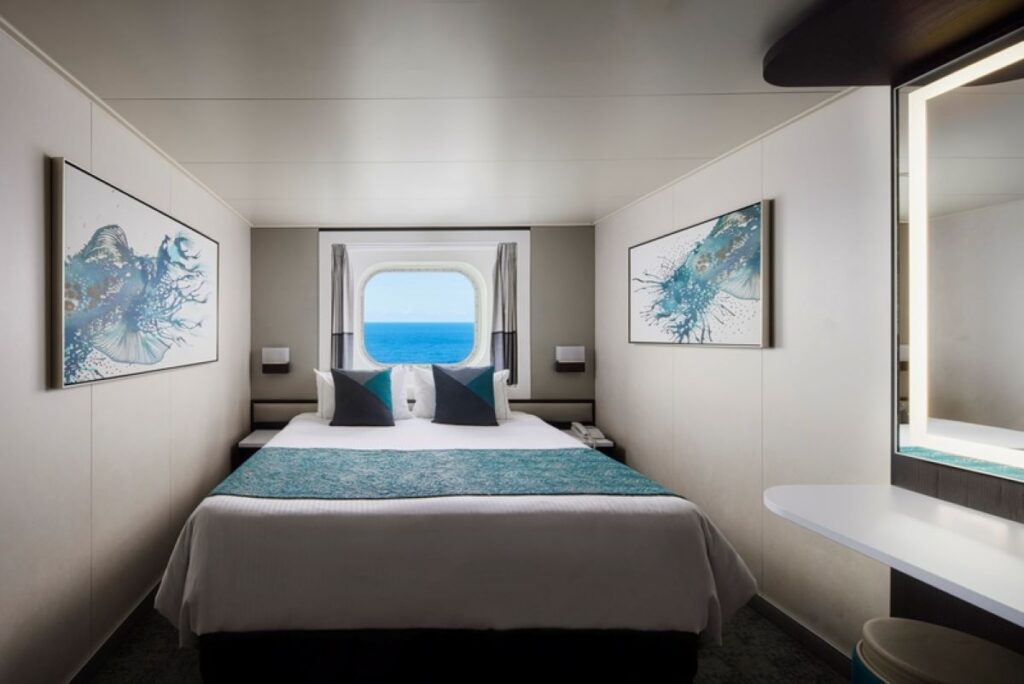
Ocean view cabins sound straightforward: a window and an ocean view. Sometimes it’s exactly that—sunlight, waves, and a nice reminder that, yes — you’re really on a ship.
Other times, the “ocean view” is technically correct but not what you pictured.
An ocean view cabin (often called “Ocean View” or “Outside”) is a stateroom with a window but no balcony. It’s the middle ground between inside and balcony. They can be a sweet spot when you want daylight and a view but don’t plan to sit outside much. They’re especially nice on sea days for a quick “what’s the weather doing?” check without leaving your room.
The first detail that matters is window vs porthole. A picture window usually makes the room feel brighter and more open, which is often the whole reason people upgrade from an interior. A porthole still gives you daylight, but it’s smaller and more “peek outside” than “sit and stare.” Some people love the classic ship feel of the porthole. Others want more glass for their money.
Now the common surprise: obstructed view. This means something blocks part of what you can see out the window. Sometimes it’s minor. Sometimes it’s most of the view. Common obstructions include:
- Lifeboats or tenders
- Support beams
- Overhangs or ship structures
If the listing says obstructed/limited view, don’t guess—verify with the deck plan and cabin notes, and try to find photos of that cabin type on your exact ship.
Ocean view isn’t always worth it, though. If you’ll barely be in the cabin, the upgrade can feel wasted. And if the only options left are heavily obstructed and priced close to balconies, you may be better off either saving the money (interior) or upgrading where you’ll feel it most (balcony).
Balcony Cabins
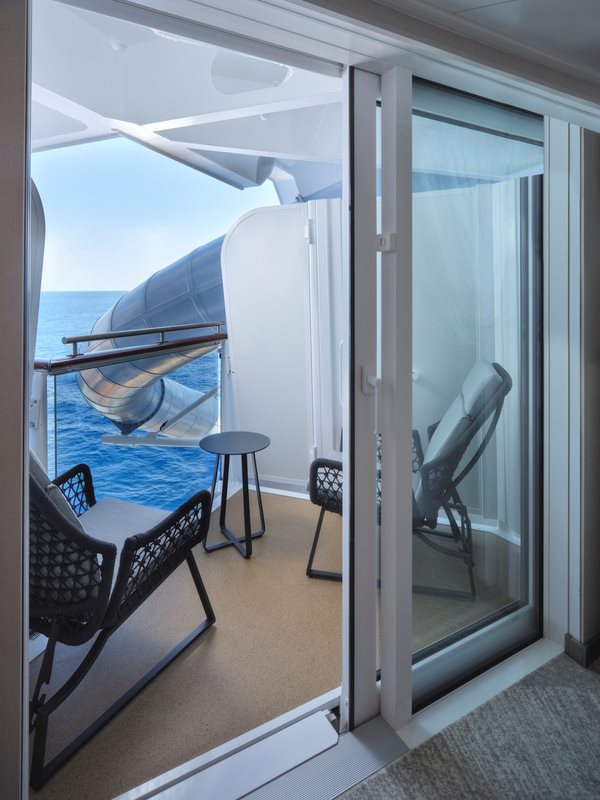
A balcony cabin gives you a private outdoor space, more natural light, and an easy way to step outside without heading to a public deck. If you love quiet moments—coffee at sunrise, sail away, winding down after dinner—balconies can feel like the best upgrade on the ship.
On our Alaska cruise, the balcony was worth the extra cost. Glacier days were the proof. We could step outside with coffee, watch the ice and waterfalls slide by, then duck back inside the second the wind picked up. No hunting for a spot along the rail, no squeezing between strangers to take a photo, and no feeling rushed because someone else wanted “your” view. It was comfort and privacy at the same time, which is a rare combo on a ship.
But “balcony” isn’t just one thing. The balcony style, railing, and cabin location can completely change the experience.
A standard balcony is the classic setup: two chairs, a small table, and just enough space to feel like you’ve got your own little corner of the ship. One detail that changes the experience fast is the railing. A solid railing can block your view when you’re seated, while a glass railing usually feels more open. Also watch for overhangs above—great for shade and shelter, not great if you pictured lots of sun.
A cove balcony (common on some ships) sits lower and feels more tucked-in. People tend to like them because they often feel more private and more protected from wind. The trade-off is that the view can feel more “side of the ship (plus a little water)” than a wide-open horizon, and on certain itineraries or sea conditions you may notice spray or dampness more than you would higher up.
An aft balcony (back of the ship) is popular for a reason: wake views are hard to beat. Some aft balconies also feel more open because of the view behind you. The main trade-offs are longer walks to elevators and, on some ships, a bit more vibration.
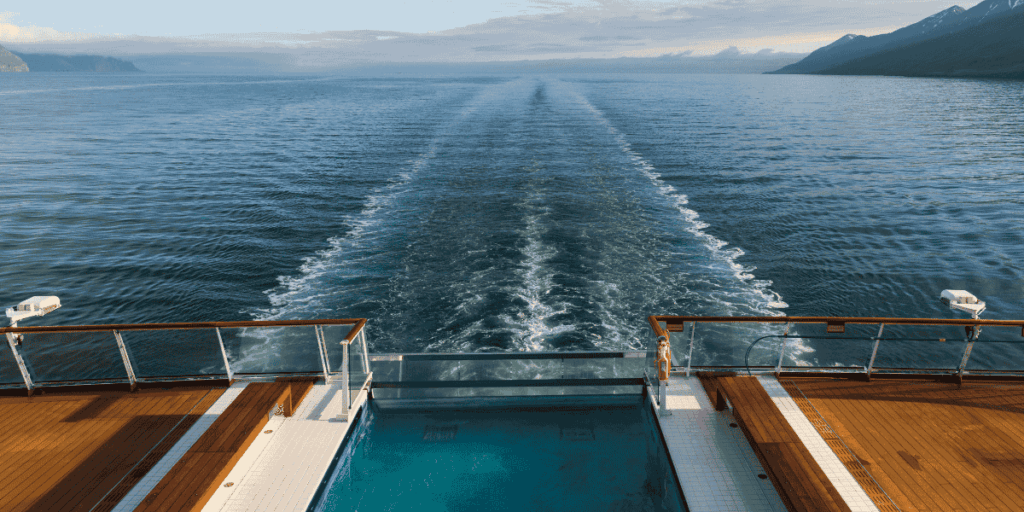
You’ll also see balcony categories dressed up with labels like “extended,” “spacious,” “premium,” “family,” or “large balcony.” Sometimes that really does mean a deeper balcony or a better layout—other times it’s basically a pricing nickname.
Quick reminder: don’t trust the label alone. Check the cabin’s square footage (including balcony space if listed), look at the deck plan, and—if you can—find photos or videos of that exact cabin type on your ship.
A few reality checks help you avoid balcony regret. Privacy isn’t automatic—some balconies feel tucked away, others feel more exposed. And on many ships, keeping the balcony door open can mess with airflow and the A/C, so you’ll usually enjoy the balcony more by stepping out for fresh air, then closing the door.
When a balcony upgrade isn’t worth it
A balcony is less likely to be worth the jump if:
- You’re on a short cruise and plan to be busy nonstop
- You’re doing a port-heavy itinerary and expect to be off the ship most days
- You don’t usually sit outside at home and you’re hoping the cruise will change that
- The balcony price is close to an upgrade you’d value more (like a better location or a higher category with perks you’ll use)
If you’re unsure whether you’ll actually use it, this is a quick self-check: 7 types of cruisers who should skip a balcony.
Suites and “Mini Suites”

Suites are the cruise version of “I want this trip to feel easy.” More space, more comfort, and sometimes perks that remove a lot of little friction points—especially on embarkation day and busy sea days.
The tricky part is that “suite” isn’t consistent across cruise lines. On one ship, a “mini suite” might feel like a slightly larger balcony cabin with a nicer bathroom. On another, it might come with priority services or access to quieter spaces. Same label, different reality.
Mini suites (and junior suites) usually deliver the “space” part. You may get a little more room to move, a seating area that feels more usable, and sometimes a bathroom upgrade like extra counter space or a tub. For couples getting ready at the same time, that extra bathroom breathing room can feel like the real luxury.
Full suites are where the layout often changes more noticeably—separate sitting areas, bigger balconies, better storage, and a more elevated feel overall. On some ships, this is also where perks become more meaningful, like priority services and lounge access.
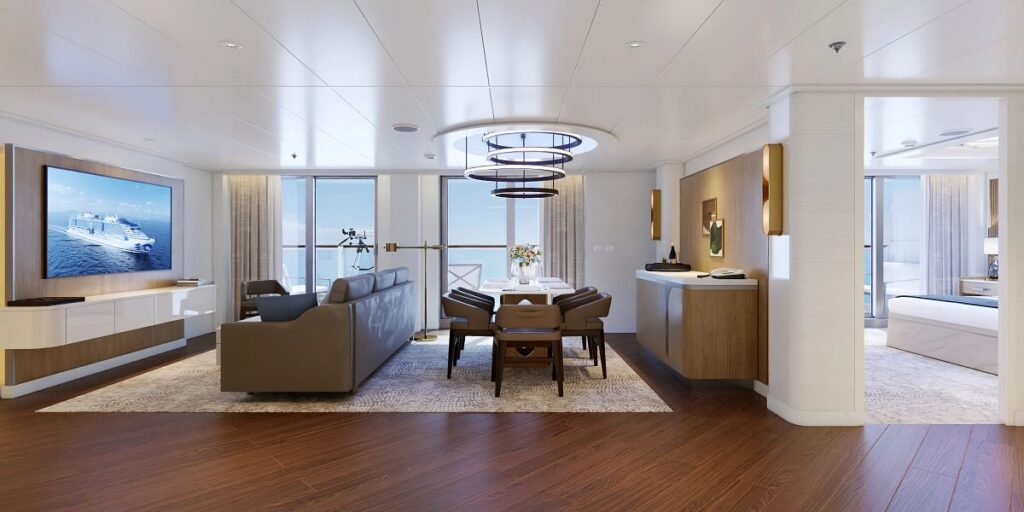
If you’re considering a suite because of perks, don’t rely on general “suite benefits” marketing. Confirm what’s included for your exact suite tier. This quick check saves a lot of disappointment:
- Confirm the suite tier name (mini/junior vs full suite vs top-tier)
- Read the included perks list for that exact tier
- Check the layout so you know what “more space” really looks like
- Look at balcony size/shape if outdoor space matters to you
Suites tend to be most worth it on longer cruises, sea-day-heavy itineraries, and trips where you want your cabin to feel like a comfortable place to spend real time—not just a place to sleep.
Specialty Cabins You’ll See When You Book
After you choose Inside, Ocean View, Balcony, or Suite, you’ll usually see extra cabin labels. Some solve a real need. Others are mainly about layout or location, so it helps to know what you’re actually booking.
Solo/studio cabins are built for one person and are often smaller. On some ships, they’re near a shared solo lounge, which can be a nice option if you want a low-pressure way to meet people. If you’re cruising alone, compare the price to a standard cabin—sometimes the jump for extra space is small.
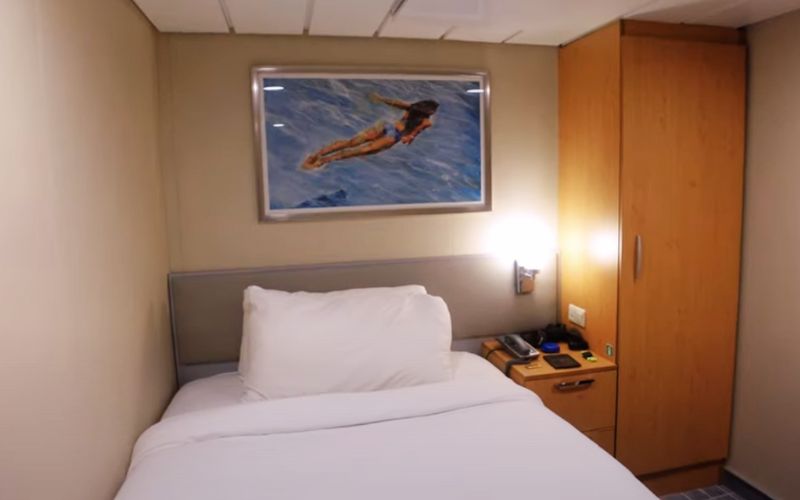
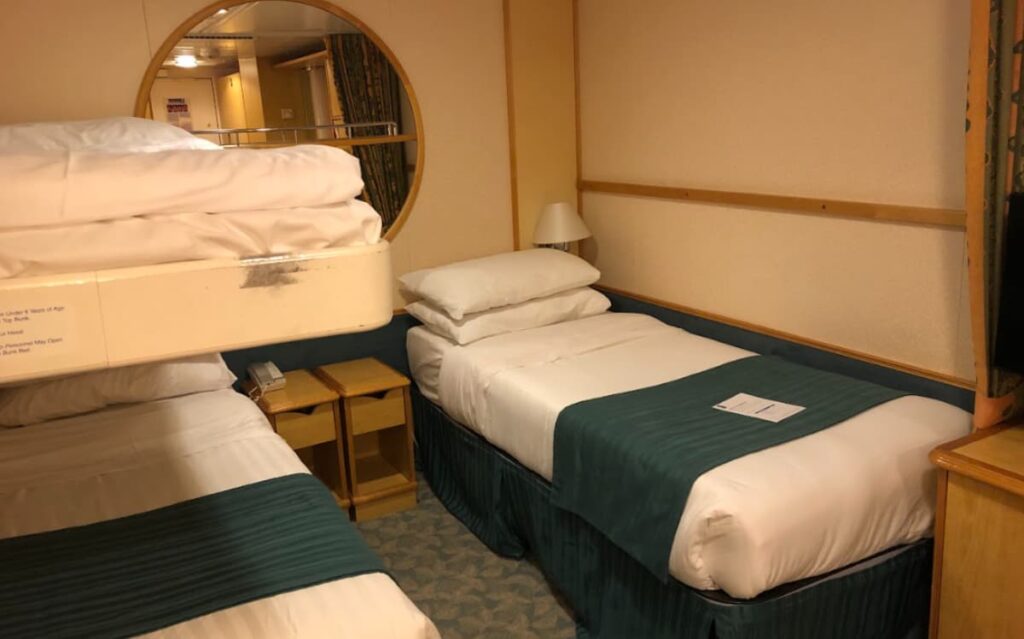
Family cabins are mainly about sleeping capacity and layout. You’ll often see sofa beds, Pullman bunks (fold-down beds from the ceiling/wall), or split-bath setups that make mornings easier. Before booking, don’t rely on the “sleeps 3” or “sleeps 4” label alone—confirm exactly what the extra beds are and where they go, because “sleeps 4” can sometimes mean “everyone fits… technically.”
Connecting cabins are two rooms joined by an interior door. They’re great for families who want separate rooms but easy access between them. They can also be noisier than standard cabins, because that connecting door doesn’t block sound as well as a solid wall.
Accessible cabins are designed for guests with mobility needs—wider doorways, more open floor space, and modified bathrooms (like roll-in showers on some ships). If you don’t need the accessibility features, it’s best not to book these so they remain available for travelers who do.
Spa cabins (or wellness cabins) are usually regular cabins located near the spa, sometimes with small extras like spa access deals, a diffuser, upgraded toiletries, or priority spa appointments—depending on the ship.
Special location cabins can include aft-view rooms, corner cabins, panoramic windows, or promenade/atrium-facing interiors. These can be great if the location matches your priorities, but they can also come with trade-offs like longer walks or more nearby activity.
Cabin Location 101
Cabin type matters, but cabin location is what decides whether your room feels peaceful or not. You can book the “right” category and still end up unhappy if your cabin sits under the wrong deck or next to the wrong traffic pattern.
Midship is often the safest “most people will be happy here” pick because it tends to feel steadier and keeps you within a reasonable walk of everything. Forward cabins (near the front of the ship) can feel more movement in rougher seas, and aft cabins (near the back of the ship) can mean longer walks and, on some ships, a bit more vibration. None of these are automatically bad—it’s just about matching the location to your comfort level.
Higher decks can be convenient for pools and food, but those areas stay active longer than people expect. Lower decks are often quieter and can feel steadier, but you’ll usually walk more to get to the action.
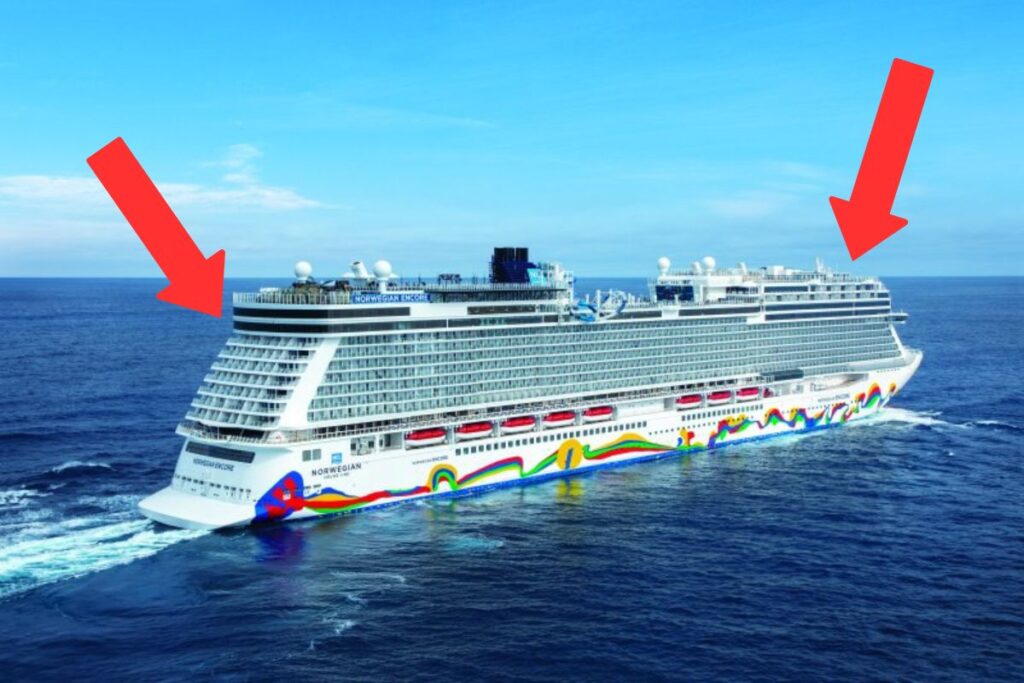
Before you lock in a cabin, take 60 seconds and look at the deck plan. You’re mainly checking what’s directly above and below your cabin. The most common noise culprits are:
- Pool decks and buffet areas
- Gyms
- Nightclubs/music venues
- Galleys and service corridors
If the deck above your cabin is labeled anything that sounds like fun or food, assume it might also be loud.
If you want quick, real-world examples by cruise line, these guides break down the cabins and locations people most often regret booking:
- Carnival cabins to avoid
- Celebrity cabins to avoid
- Royal Caribbean cabins to avoid
- NCL cabins to avoid
Being near elevators is convenient, but it can also mean more hallway traffic. If you want a middle ground, choose a cabin that’s not directly next to the elevators, but not so far away that every trip back feels like a trek.
Guarantee cabins can save money, but they increase your odds of landing in a location you wouldn’t have chosen. If you know you’re picky about quiet, motion, being near family, or avoiding certain decks, choosing your exact cabin number is usually worth the extra cost.
Final Word
If you’re still torn, here’s the simplest way to decide — consider how you prefer to cruise:
- If your cabin is just a place to sleep and shower, an inside or ocean view will be the best value.
- If quiet moments and fresh air are part of your daily routine, a balcony is usually worth it.
- If you want more space (or fewer little hassles), a suite can make the whole trip feel easier—just make sure the perks match the price.
And If you’re a first-timer with no idea of your preferred cruising style, and you want a quick refresher on the basics, this guide is a helpful companion.
No matter what you choose, take 60 seconds to check the deck plan before you book; it’s the fastest way to avoid a “next time I’ll book differently” lesson.
Today’s Top Cruise Deals
See today’s best deals from ALL travel agents