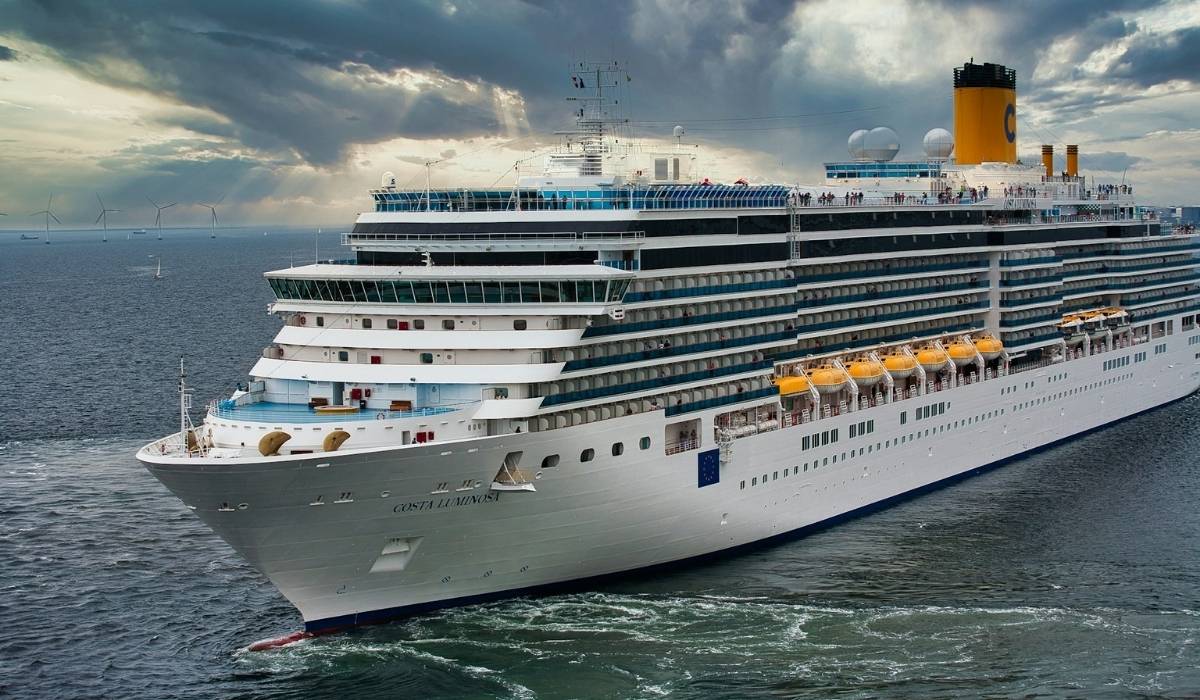
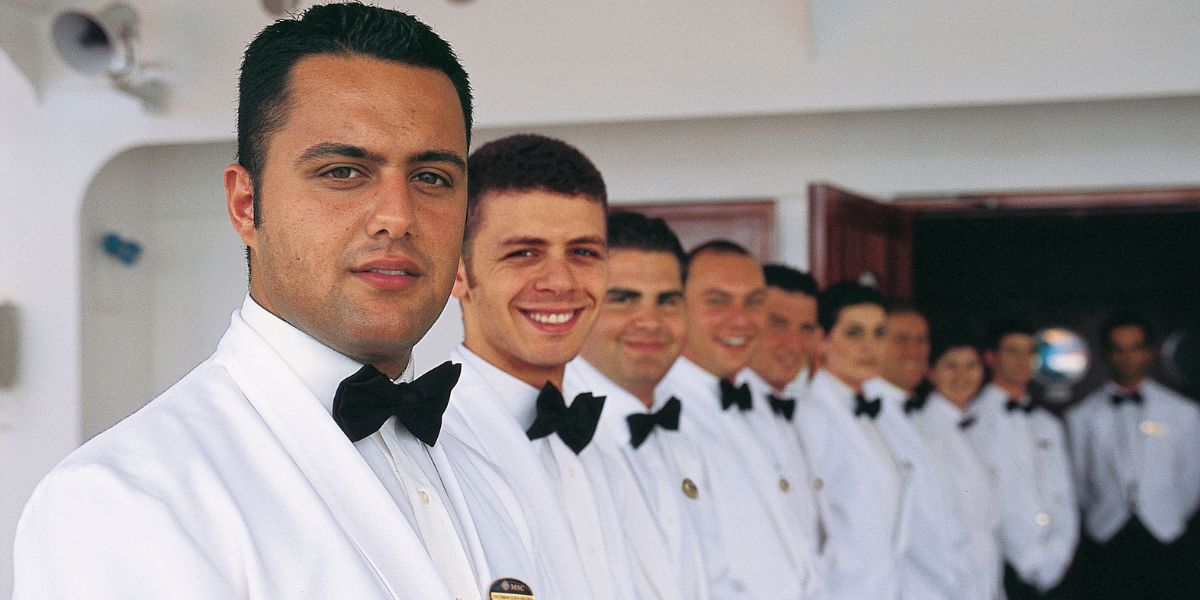
When most people picture life on a cruise ship, they imagine endless buffets, sparkling pools, and exotic ports of call. But behind the scenes, the reality for the thousands of crew members who keep these floating cities running can be very different.
Cruise lines promote working at sea as a chance to travel the world, meet new people, and earn money, but the truth can be more complicated. Many crew members describe the job as rewarding in some ways, but also exhausting, isolating, and at times unfair.
To understand what life at sea is really like, I looked into interviews, reports, and first-hand accounts from crew members themselves. Their stories reveal the downsides of ship life, and why, despite the challenges, many still choose this path.
Long Working Hours and Exhausting Shifts
One of the biggest shocks for new crew is just how much they’re expected to work. Unlike land-based jobs with weekends off, cruise ship contracts usually mean seven days a week, for months at a time.
It’s common for staff in housekeeping, food service, and engine departments to work 12 or more hours a day, every day, with no full day off until their contract ends. Some crew describe weeks where their shifts stretched to 14–16 hours, especially on turnaround days when new passengers are boarding.
Even during quieter times, days off are rare. Instead, crew get “rest hours” split into small chunks, which sounds nice in theory, but in practice often means trying to nap for a couple of hours before being called back on duty. Fatigue quickly builds up, and many crew members say they spend their contracts permanently tired.

One former Norwegian Cruise Line employee told Business Insider they were pulling 70-hour workweeks for just $1,600 a month, which works out to just a few dollars per hour. Others compared their schedules to “investment banking or restaurant kitchens, except without the weekends.”
For passengers, the service seems seamless. But behind the smiles and efficiency, some crew members are running on very little sleep, with almost no downtime to recharge.
Low Pay and Wage Concerns
For all those long hours, most cruise ship workers earn surprisingly little. While senior officers and entertainment staff can make comfortable salaries, the majority of crew, especially those in entry-level service roles, are paid far less than many passengers might expect.

Housekeepers, buffet attendants, and galley cleaners often take home under $2,000 a month. When you break that down by hours worked, it can mean just a few dollars an hour — far below the U.S. minimum wage.
Some cruise lines argue that food and accommodation are included, so crew don’t have the same expenses as land-based workers. But many are supporting families back home, often sending most of their wages overseas. Tips can make a difference for some positions, but they’re unreliable — especially on sailings with fewer passengers or when guests choose not to tip.
Related reading: The Truth About Tipping on a Cruise: What Crew Members Really Think
Meanwhile, the contrast at the top of the pay scale is huge. Captains can earn over $15,000 a month, while CEOs of major cruise companies take home millions in bonuses. One former HR manager bluntly summed it up: “Entry-level crew are paid peanuts, while executives pocket millions.”
For many crew, the low pay is still better than what they might earn at home in countries like the Philippines, India, or Indonesia. But when viewed from a U.S. perspective, the disparity is striking, especially considering the profits cruise companies generate every year.
Related reading: How Much Do Cruise Ship Workers Really Earn? The Truth About Their Pay

It’s also worth noting that not every story is the same. Some positions, particularly with larger cruise lines, can pay more than many expect. For example, a Royal Caribbean casino host revealed his January 2025 pay-slip, which totaled $4,340.30 for the month. With free accommodation, meals, and no utility bills to worry about, much of that went straight into savings. As Chris explained: “That’s a lot of money, especially when you’re not paying rent or car payments. It’s actually pretty difficult to earn that kind of salary back in the UK right now.”
Read the whole article here: Cruise Ship Worker Shares Payslip Revealing the Amount He Gets Paid Per Month
Social Isolation and Mental Health Challenges
Life at sea isn’t just physically exhausting; it can be emotionally draining too. Crew members spend months away from family and friends, often missing birthdays, weddings, and everyday life back home.

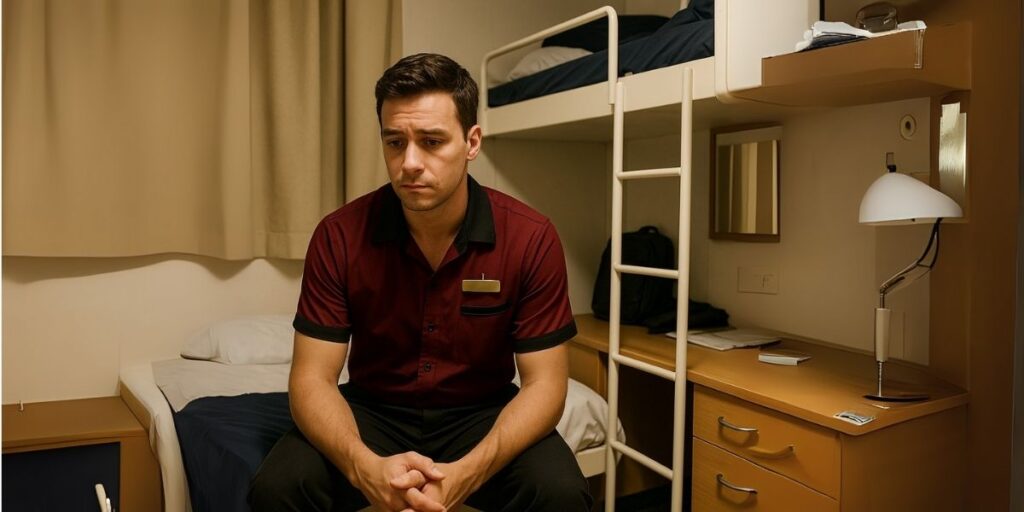
Most live in tiny, shared cabins below deck, with little privacy or personal space. Shore leave can help, but it’s not always guaranteed. Sometimes, crew aren’t allowed off the ship due to tight schedules or local restrictions. For some, weeks can pass without stepping foot on land.
This sense of isolation can take a toll on mental health. Crew have described feeling trapped in a “bubble,” where every day looks the same. The pressure to smile and provide top-notch service to passengers only adds to the emotional strain.
The COVID-19 pandemic made things even worse. In 2020, around 100,000 crew were stranded at sea after cruises shut down, some stuck in their cabins for weeks or even months.
Even outside of a global crisis, the mental demands of ship life are tough. As one long-time crew member put it: “If you’re not mentally strong, you won’t survive.”
Rights Violations and Limited Legal Protections
Working on a cruise ship doesn’t come with the same rights many land-based workers take for granted. That’s because most cruise lines register their ships under so-called “flags of convenience”. Countries like Panama, the Bahamas, or Liberia that have much looser labor laws.
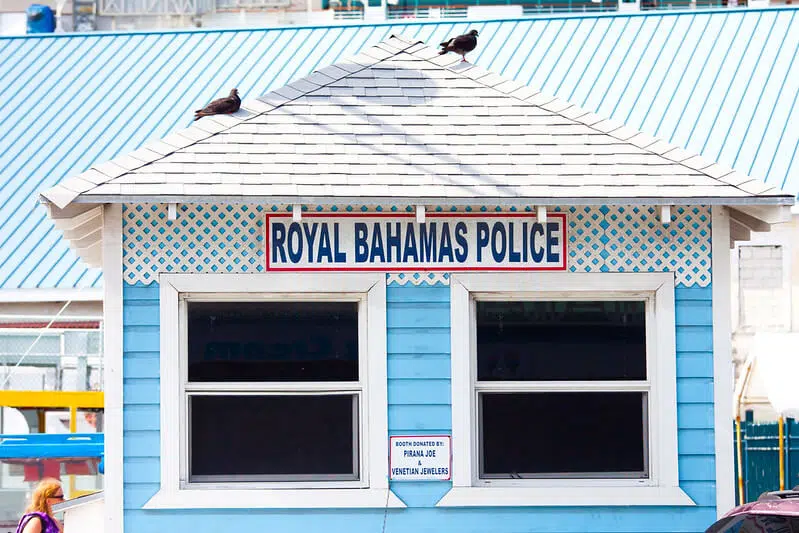
The result? Crew often have very limited legal protection. Contracts usually favor the company, not the worker. If someone is injured, unfairly dismissed, or has a dispute over pay, pursuing justice can mean complicated arbitration in a foreign country rather than a straightforward case in court.
Many crew also live with the constant fear of losing their job. Terminations can happen suddenly, sometimes referred to as the dreaded “6 a.m. knock,” when security shows up at a cabin and orders the employee to pack and leave at the next port. In some cases, crew are dismissed for breaking minor rules, but one former staff member alleges that companies also use this system to silence those who complain or speak up.
The hiring process itself can be risky too. Some workers are recruited through agencies that charge hefty upfront fees, leaving them in debt before they even start their contract. That debt makes it harder to walk away, even if conditions are tough.
Related reading: 18 Carnival Crew Members Were Deported – Advocates Say It Was Unfair
Health and Safety Concerns
Cruise ships are floating cities, and working on them comes with its own set of risks. Crew members often take on physically demanding jobs, from lifting heavy luggage to handling industrial cleaning chemicals.
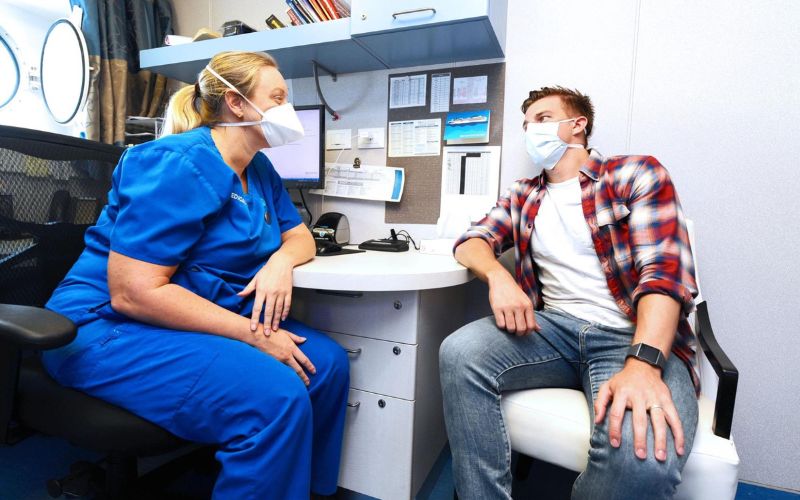
Access to healthcare onboard is geared more towards passengers than staff. Crew have reported being expected to work through illness unless it’s something highly contagious. And while safety drills are regular, long hours and fatigue can make accidents more likely. Maritime experts have warned that exhaustion is itself a safety hazard, leading to slips, mistakes, and slower response times.
Although cruise lines have stepped up health measures since the pandemic, adding stricter cleaning routines and wellness checks, many crew feel their wellbeing comes second to passenger comfort.
Limited Internet Access and Communication Barriers
Staying connected with family is one of the hardest parts of working at sea. Until recently, most crew had very limited, and very expensive internet access. Unlike passengers who can buy packages freely, staff often had to pay steep rates just to send a few messages, or wait until the ship docked so they could hunt for free Wi-Fi in a café or port terminal.

That’s why you’ll often see groups of crew gathered in port, huddled around coffee shops or fast-food restaurants, all trying to catch a signal and make quick video calls home. For many, it’s the only reliable chance they get to properly talk to their families.
On some ships, crew are back to paying around $15 for just 1 GB of data, a big expense on a low salary.
That lack of affordable internet makes it harder for the crew to keep in touch with loved ones. Video calls are rare, and even basic check-ins can be difficult. For workers already facing long hours and homesickness, being cut off from family support can make isolation feel even worse.
However, crew internet access has improved on some ships, but pricing and quality still vary widely by cruise line. Some lines now offer basic messaging or app-based connectivity options, while others still charge for data packages
Living Conditions Onboard
For passengers, cruise ships are full of luxury, but behind the “crew only” doors, life looks very different. Most staff live below deck in tiny, windowless cabins, often shared with one or more roommates.
A standard crew cabin might only be about nine feet square, just big enough to squeeze in bunk beds, a locker, and a small bathroom. Privacy is almost non-existent, and with different shift patterns, someone is nearly always sleeping while someone else is getting ready for work. Noise from engines, anchors, or machinery is constant, making proper rest difficult.
Higher-ranking staff like officers may get larger cabins or even a porthole, but for the majority, space is limited and comfort is basic. Many crew say their cabins are really just a place to crash between shifts, not somewhere you’d want to spend much time.
Recreation options are also limited. While passengers enjoy pools, gyms, and bars, crew areas are often small and functional – a mess hall for meals, perhaps a tiny gym, and maybe a crew bar. Food in the mess is plentiful but repetitive, and complaints about a lack of variety are common.
During ship refurbishments, it’s usually the passenger areas that get upgrades, while crew cabins stay the same. As one worker put it: “We get new carpets maybe, but the cabins never really change.”
However, It’s Not All Bad…
While the downsides of working on a cruise ship are very real, for many people, it’s also the opportunity of a lifetime.
The experience can depend a lot on the role. For example, dancers, singers, and other performers often find it difficult to get steady work at home, but on a cruise ship, they’re able to do what they love in front of packed audiences, often with better pay and more security than they’d find on land. Officers and senior staff can build long-term careers, while entry-level crew see it as a stepping stone to better opportunities.
Cruise lines are also slowly making improvements. Some of the newest ships have single-occupancy crew cabins, or redesigned bunk layouts that offer a bit more privacy. A few lines now provide free messaging apps and mental health support hotlines, recognizing how vital connection and wellbeing are.
Still, the tough side of ship life is undeniable. And yet, for many, the sacrifices are worth it.

Salaries are usually paid in U.S. dollars, which stretch further in countries with lower living costs. For someone supporting relatives in the Philippines, India, or Indonesia, a few months at sea can mean far more financial stability than years of work back home.
Also, many also get the chance to bring relatives on board at a discount, turning their workplace into a temporary home.
And while cabins may be cramped, the friendships formed onboard are often described as “like family.” Many crew return year after year because of the bonds they build, the travel opportunities, and the pride of supporting loved ones through their work.
So yes, life as crew isn’t the glamorous adventure the brochures might suggest. But despite the challenges, many still choose it, and their hard work is what keeps the cruise industry running, and it really is the adventure of a lifetime.
And for passengers, it’s worth remembering that the smiling waiter who remembers your favorite drink, or the steward who keeps your cabin spotless, is doing an incredibly demanding job often far from home. Showing appreciation through kindness and tips can make a real difference to the people who make your holiday possible.
Today’s Top Cruise Deals
See today’s best deals from ALL travel agents