
With thousands of passengers on board and buffets running nearly all day, you’d think cruise ships must throw away mountains of food. But the truth is a lot more surprising and pretty impressive.
Major cruise lines have been working behind the scenes to cut food waste in half. Here’s a look at what really happens to the food you don’t eat on a cruise.
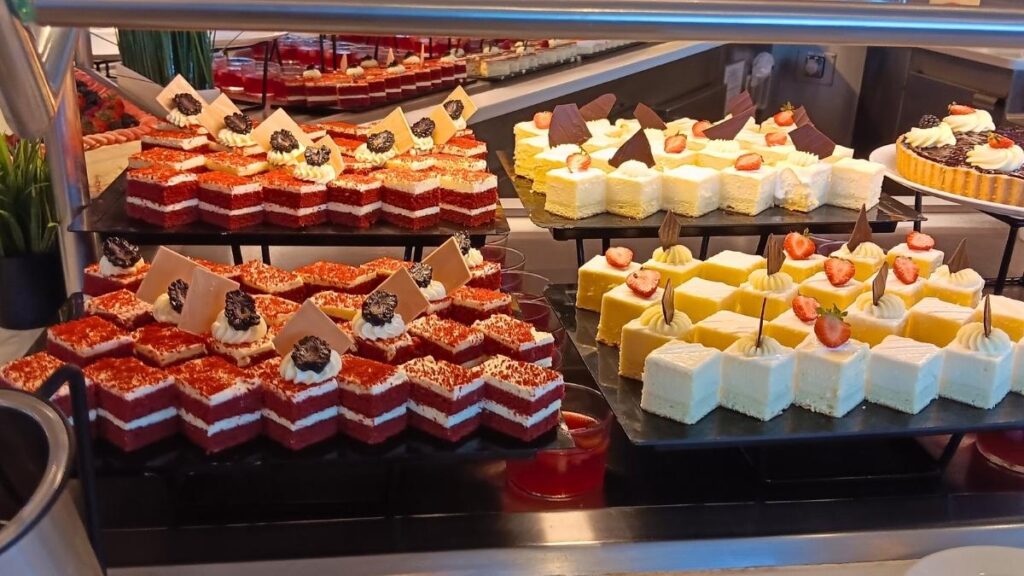
Why Food Waste Matters on Cruise Ships
Feeding a cruise ship is like running a floating city. On the biggest ships, like Royal Caribbean’s Icon of the Seas, there can be more than 7,500 guests and 2,000 crew on board – all of them needing breakfast, lunch, dinner, and snacks every single day.
Once food is cooked and served at a restaurant or buffet, it can’t be returned to the kitchen. It’s either eaten… or it becomes waste.
And food waste isn’t just a cruise problem – restaurants, supermarkets, and hotels all over the world struggle with it too. But on a ship where storage space is limited and there’s no easy way to take out the trash, managing food waste is even more important.
That’s why many cruise lines are investing in new technology and smarter planning – not just to help the planet, but to save millions of dollars a year in food costs.
Royal Caribbean is a great example of how this works in practice, thanks to their ambitious “Win on Waste” program.
Royal Caribbean’s “Win on Waste” Program
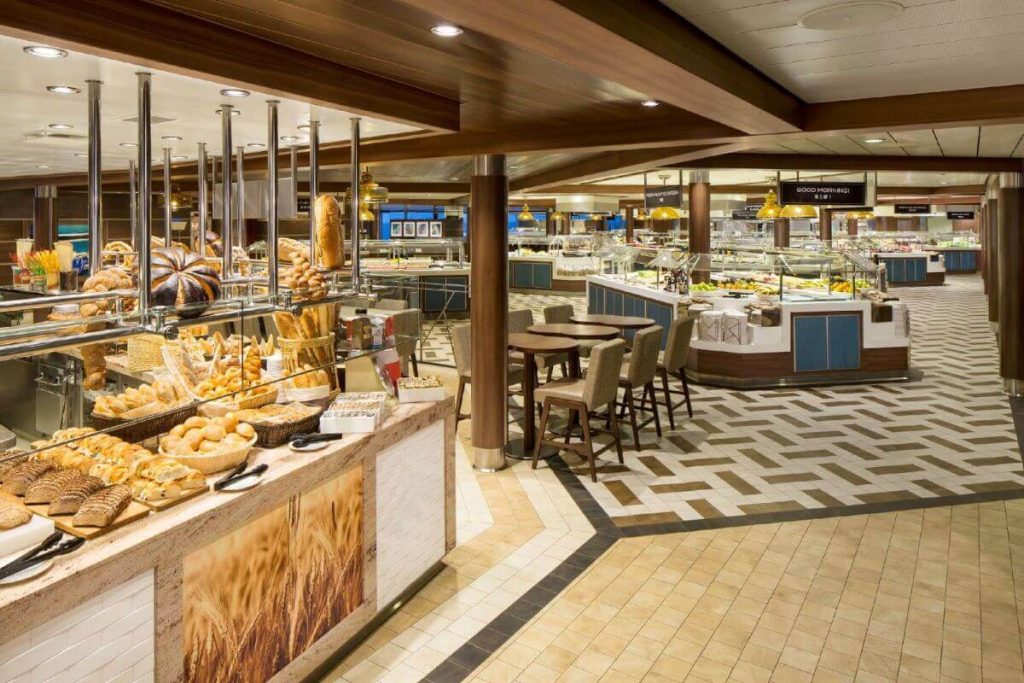
Royal Caribbean has set a bold goal: to cut food waste across its entire fleet by 50% by 2025. By 2024, they’d already reduced waste by about 33%, saving millions of dollars a year and literally tons of food.
Here’s how their “Win on Waste” program works – and it’s a great example of how cruise lines are getting smarter about food:
1. Smarter Planning with Data
Royal Caribbean uses a custom-built platform to track food supply and predict exactly how much should be ordered, prepped, and cooked for each day of a sailing.
2. Real-Time AI Adjustments
Artificial intelligence adjusts food production in real time, using passenger demographics, itinerary, and even weather forecasts. For example, if it’s going to rain, they might prepare less pool-deck food and more comfort meals indoors.
3. Dedicated Food Waste Officers
Each ship has crew members whose job is to monitor food waste, train other staff, and make sure the plan is being followed.
4. Tracking Guest Preferences
Popular dishes are made in the right quantities, and less-loved items are reduced on future menus – meaning fewer untouched trays of food at the buffet.
5. Crew Awareness Campaigns
Posters and training in crew dining areas encourage staff to be part of the solution, reducing waste at every stage.
These five steps are designed to stop food waste before it happens, and they’re already making a big difference.
Next, let’s look at what it actually takes to feed thousands of passengers every day, and how cruise ships make sure there’s enough food without going overboard. Royal Caribbean Blog goes into details in this video 👇
And it’s not just Royal Caribbean taking action. Carnival Corporation, which owns brands like Carnival Cruise Line, Princess Cruises, Holland America Line, and Cunard, recently announced that it has already beaten its 2025 goal of cutting food waste by 40%, reaching a 44% reduction in food waste in 2024 compared to 2019 levels.
Its company-wide “Less Left Over” strategy uses a mix of real-time data, AI forecasting, and staff training to predict guest demand and prepare the right amount of food, right down to individual menu items. Meals are plated more efficiently, and menus are tweaked in real time based on what passengers are actually eating.
Carnival calls this effort “a global rallying cry,” aiming to turn everyday actions into long-term impact across all its brands.
Behind the Scenes: Feeding Thousands Efficiently
On a ship like Icon of the Seas, Royal Caribbean needs to load more than 130,000 pounds of food before it leaves port – enough to feed over 10,000 passengers and crew every single day for a full week. That’s a massive operation, and getting it right is key to avoiding waste.
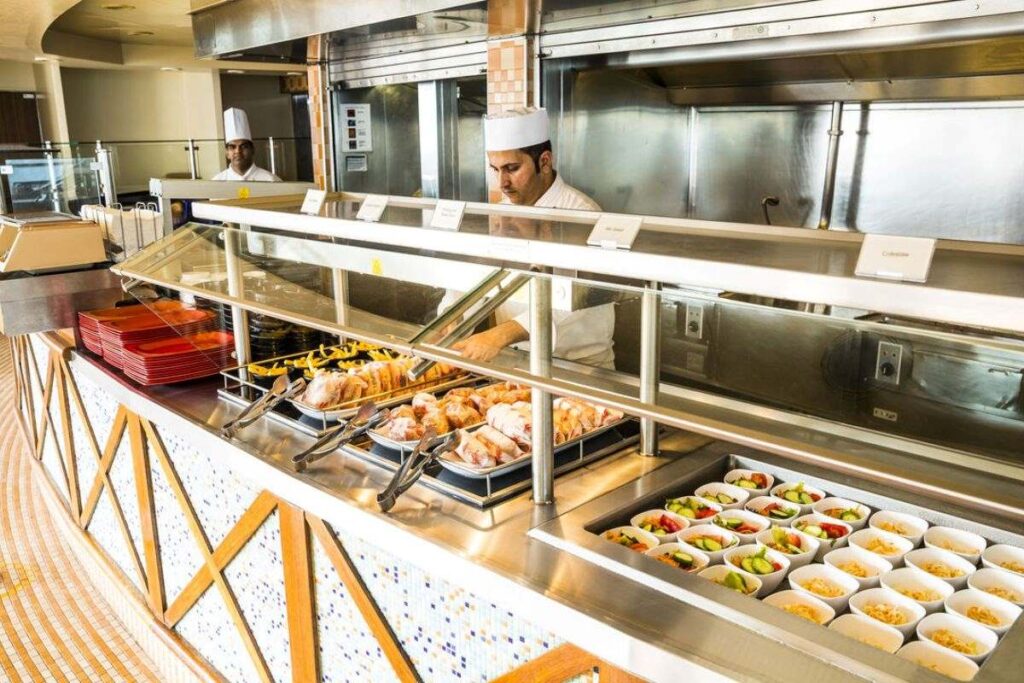
The process starts even before the sailing begins. Royal Caribbean uses AI-driven forecasting to work out exactly how much food to order and prepare, based on who’s sailing, where the ship is going, and even what the weather will be like. For example, if rain is predicted all week, they know guests will be spending less time on the pool deck and can adjust food production accordingly.
Once on board, kitchens prepare food in small batches rather than huge trays, which keeps everything fresh and reduces the amount that goes uneaten. Even bananas are ordered at different stages of ripeness, so there are perfectly yellow ones available throughout the cruise.
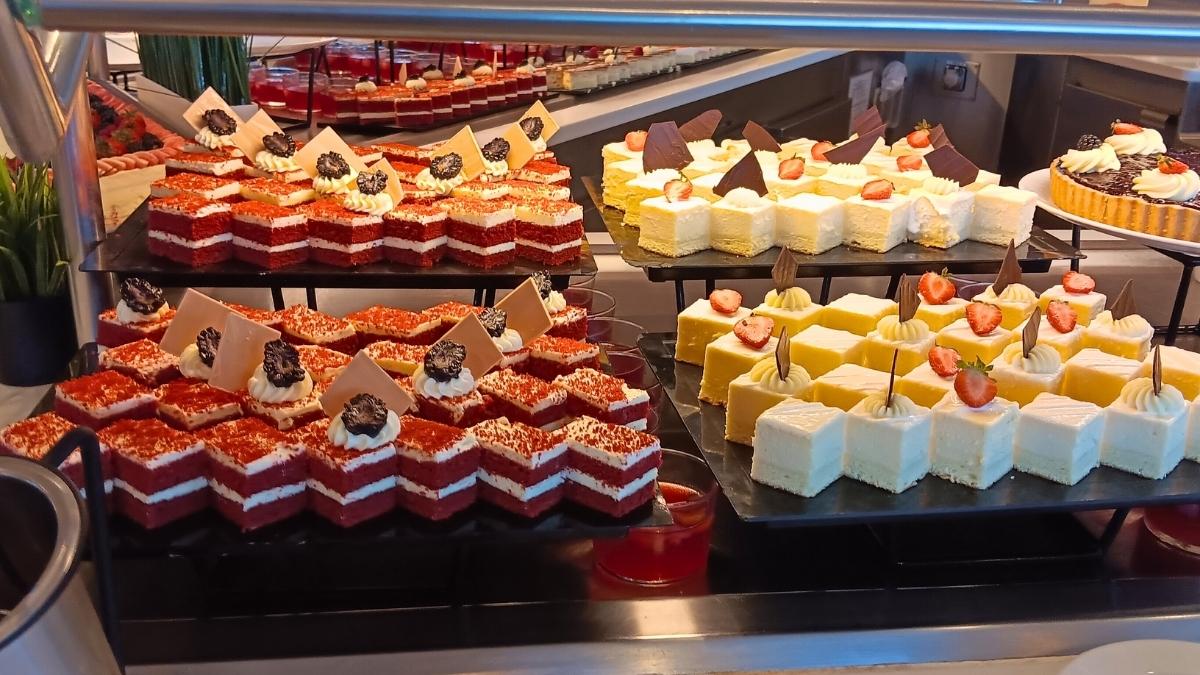
Buffets are topped up frequently in smaller portions, and live cooking or carving stations help control portion sizes while still giving guests a great experience. Behind the scenes, waste data is reviewed daily by the ship’s food and beverage team so they can tweak menus and production for the next day.
All of this careful planning means guests still enjoy plenty of choice, while the ship avoids ending up with mountains of untouched food. And when there is waste, cruise lines have some surprisingly clever ways of dealing with it — including turning it into fuel for the ship.
What Happens to Leftovers
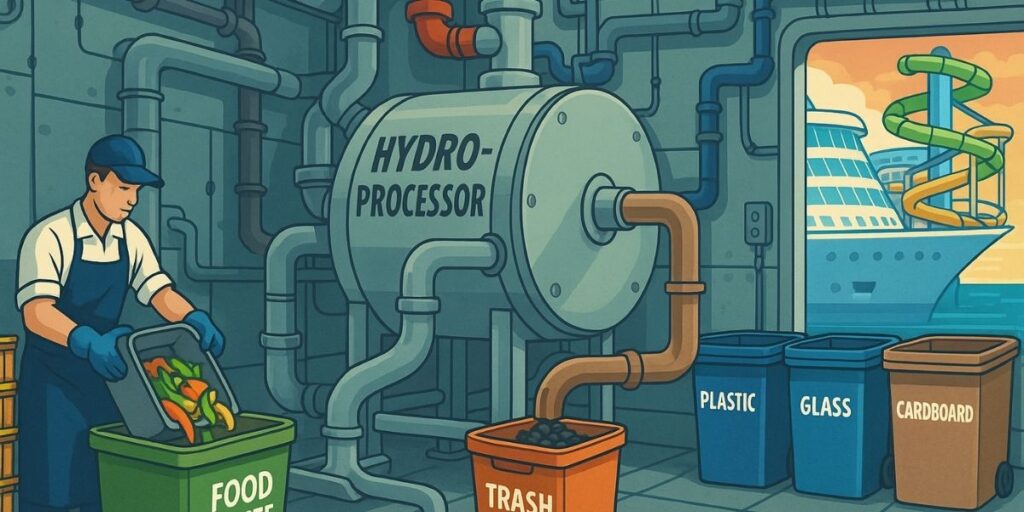
So, what about the food that still goes uneaten? Cruise ships can’t just throw it overboard — and they don’t. Instead, every bit of waste is carefully handled below deck.
Leftover food scraps are first collected and separated. Before they ever reach the buffet, trimmings and peelings from the kitchen go into special containers. After service, uneaten food is sent down pipes to a hydro-processor, where it’s pulped and dried.
The result is a lighter, more compact form of waste that takes up less space and even reduces the ship’s overall weight, meaning it burns less fuel. Some of these dried food pellets are then used to help generate energy on board – even powering parts of the ship like the water park.
Other waste, such as plastic, glass, and cardboard, is crushed, compacted, and sorted for recycling when the ship returns to port. Many of Royal Caribbean’s ships are “zero landfill,” meaning the vast majority of onboard waste is recycled, repurposed, or sent to waste-to-energy facilities or incinerated responsibly.
It’s a complex process, but it means cruise lines can drastically reduce how much waste ends up in landfills, while also saving money and fuel in the process.
The Bottom Line
Food waste will always be a challenge when you’re feeding thousands of people every day, but cruise lines like Royal Caribbean are proving it can be done smarter. By using data, AI, and clever planning, they’re cutting waste dramatically — saving money, reducing their environmental footprint, and still giving guests the dining experience they expect.
So next time you’re at the buffet, you can enjoy your meal knowing that a lot of thought has gone into making sure as little as possible ends up in the bin.
Today’s Top Cruise Deals
See today’s best deals from ALL travel agents
Hi Cat A very interesting article about food waste and management.
Love your articles
Best Regards
Brian Flynn Long time cruiser on most of the lines.
Hi Brian, thank you so much for the kind words! I’m really glad you enjoyed the article. It’s always great hearing from long-time cruisers like yourself.