Packing for a cruise can be exciting, but if you don’t know the rules, it can also lead to delays, confiscated items, or worse, being denied boarding. Unlike airlines, cruise lines don’t usually charge for checked bags, but that doesn’t mean you can pack whatever you like. Each cruise line has its own luggage policies, alcohol limits, and list of banned items, and these aren’t always obvious when you’re planning your trip.
In this guide, we’ll walk you through the 5 most important luggage rules every cruiser should know.

1. Know How Much You’re Allowed to Bring
Not all cruise lines word their luggage policies the same way, but most follow a similar logic: bring what you need, but don’t overdo it. While there are no excess baggage fees like with airlines, limited cabin space and port logistics mean packing light is still important.
Here’s a quick breakdown of luggage limits for popular cruise lines:
- Carnival Cruise Line: Recommends two suitcases per guest, not exceeding 16 inches high by 24 inches wide (lying flat) or 50 pounds each. Larger bags may not fit under the bed or in the wardrobe.
- Royal Caribbean: Takes a more relaxed approach, saying you can bring what is “reasonable” for your comfort. In practice, this means around two standard suitcases per person.
- Norwegian Cruise Line (NCL): Allows up to two pieces of checked luggage per guest, with a maximum of 22 kg (48.5 pounds) each. Overweight luggage may be delayed in reaching your cabin.
- MSC Cruises: More specific guidelines, stating 90 x 75 x 43 cm and 23 kg per suitcase, with a maximum of 8 pieces. Or 100 kg total per cabin.
- Disney Cruise Line: Follows airline-style rules: two checked bags + one carry-on per person. A family-friendly policy designed to keep things simple and consistent.
Tip: Regardless of the cruise line, your luggage still has to fit comfortably in your cabin. Oversized bags are more hassle than they’re worth, and often unnecessary.
Related reading: Cruise Packing Fails: The Most Useless Items People Brought Onboard
2. Carry-On Bags Are Non-Negotiable

Even if you check your main luggage at the terminal, it can take several hours to arrive at your stateroom – especially on large ships. That’s why your carry-on bag is essential for a smooth first day onboard.
Cruise lines don’t typically have strict limits on carry-on size, but you’ll need to be able to carry it yourself during embarkation and keep it with you until your cabin is ready. Think of it like your personal “survival kit” for the first few hours of your holiday.
What to pack in your cruise carry-on:
- Travel documents (passport, boarding pass, cruise line app with check-in info)
- Wallet (cash, cards, any drink or Wi-Fi package receipts)
- Prescription medications (don’t risk delays or loss in checked bags)
- Phone and charger
- Sunglasses and sun cream (you may be waiting on the deck)
- Swimwear (if you want to hit the pool straight away)
- A change of clothes (just in case your main luggage is delayed)
- Valuables (jewelry, electronics, cameras, etc.)
Important: Checked luggage is collected by porters and scanned before boarding. You won’t see it again until it’s delivered to your cabin door, and that can be hours later. If your essentials are in your suitcase, you’re stuck without them.
3. Don’t Pack Prohibited Items

Cruise lines have strict security checks at embarkation, and some items are completely banned for safety reasons. Trying to bring these on board can result in your belongings being confiscated – or, in rare cases, being denied boarding altogether.
Common prohibited items include:
- Weapons or anything resembling a weapon
- Flammable items like candles, incense, fireworks, or lighter fluid
- Heating appliances such as irons, kettles, coffee makers, and clothes steamers
- Drones (banned or restricted on many lines)
- Power strips with surge protectors (non-surge protected ones are sometimes allowed)
You’ll also want to avoid packing anything that’s on the cruise line’s restricted list, even if it seems harmless. Rules can vary slightly between cruise lines, so it’s always worth checking the official website before you travel.
Cruise security may scan your bags both during embarkation and re-boarding after port days, so even items picked up mid-cruise can be flagged and held until the end of the trip.
If in doubt, leave it out.
Related reading: These 8 Things Are Totally Legal on Land, But Banned on Cruise Ships
4. Be Smart About Alcohol

Cruise lines have very specific rules about bringing alcohol on board. These vary depending on the company, but in most cases, you’re allowed to bring a small amount of wine or champagne with you, as long as it’s packed in your carry-on.
Here’s what some of the major cruise lines allow:
- Carnival Cruise Line: One 750ml bottle of wine or champagne per adult in carry-on luggage. No beer or spirits. A corkage fee applies if you drink it in public areas.
- Royal Caribbean: One 750ml bottle of wine or champagne per adult in carry-on luggage. No beer or spirits allowed.
- Norwegian Cruise Line (NCL): Wine and champagne are permitted with a corkage fee, even if you don’t plan to drink it in a public area.
- Disney Cruise Line: More generous than most. Adults can bring up to two bottles of wine or champagne, or six 12-ounce beers per person, at the start of the cruise and at each port.
- MSC Cruises: Up to two bottles of wine/champagne per adult in carry-on (corkage fees may apply).
- Costa Cruises: No outside alcohol permitted.
Alcohol purchased in duty-free shops or while in port is usually held by the cruise line and returned to you at the end of the voyage.
Trying to sneak alcohol on board in disguised containers (like mouthwash bottles) is against the rules. If discovered, the items will be confiscated and may not be returned.
The best approach is to stick to the guidelines – it avoids the risk of delays, confiscation, or extra fees.
Related reading: Cruise Ship Scanners and Alcohol: What They Can Really Detect
5. Label Your Luggage Properly
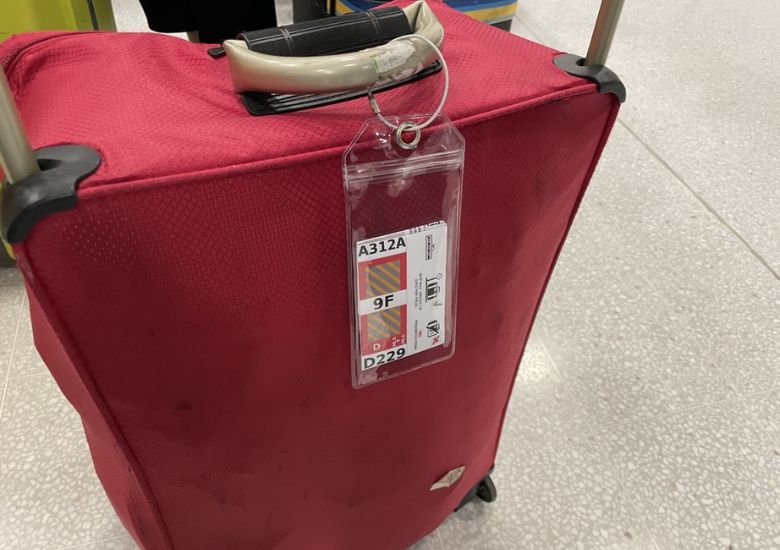
Once you complete online check-in, your cruise line will provide printable luggage tags that include your name, stateroom number, and deck. These tags are essential for getting your bags delivered to the right cabin.
The problem? They’re usually made of paper and can easily tear or fall off during transit.
To avoid your suitcase getting lost or delayed, it’s a good idea to use plastic luggage tag holders. These are inexpensive, reusable, and specifically designed to fit cruise tags from most major lines. You can buy them online before your trip and simply slide the printed tag inside.
In addition to using the official cruise tag, it’s also smart to add a standard ID tag with your name and mobile number – just in case the official one comes off.
If you’re handing your luggage to a porter at the cruise terminal, make sure your tag is attached securely before you arrive. Porters will load it onto the ship for you, and the crew will deliver it to your cabin later that day.
Related reading: Everything You Need to Know About Cruise Luggage Tags
Final Word
Cruises are meant to be relaxing, but starting off on the wrong foot because of a packing mistake or overlooked rule can add unnecessary stress. By following these key luggage rules, you’ll avoid delays at embarkation, stay within cruise line policies, and make the most of your limited cabin space.
Remember, packing for a cruise isn’t just about what to bring; it’s about knowing what’s allowed, what’s practical, and what’s better left at home.
Today’s Top Cruise Deals
See today’s best deals from ALL travel agents